Roof Repair Services in East Georgia
Leak tracing, storm damage, missing shingles, flashing failure — diagnosed at the source and repaired right the first time.
Don't Let a Small Leak Become a Big Problem
Roof repair done right means finding where water is actually entering — not just slapping sealant over the nearest crack. At Davis Construction & Roofing Co, the owner has built the company around one principle: trace the true source of every roof leak, fix the underlying failure, and leave the structure sound. Hidden leaks rot decking and ruin drywall long before a single stain appears on your ceiling, which is why we don't patch symptoms.
We serve Augusta, Martinez, Evans (where our Evans, GA roofing team works Columbia County subdivisions day in and day out) and communities across East Georgia, and we cross the river for roof repair in North Augusta, SC with Aiken County permitting handled through our licensed SC partner GC. For active roof leaks or storm damage, we aim to be on-site the same or next day to assess and stabilize. Permanent repair is then scheduled as soon as materials and weather allow. Call 762-477-3858 to get a roofing specialist to your property fast.
The sections below give you honest cost context by repair type, a diagnostic guide to the seven most common failures, a straight answer on the handyman-vs-licensed-contractor question, and a clear walkthrough of exactly what happens from your first call to our final inspection. No filler, no runaround.
Common Roof Problems We Fix
Your roof takes a beating from Georgia's heat cycles, afternoon thunderstorms, and occasional hail. Davis Construction is equipped to handle every failure mode across residential and commercial properties:
Roof Leaks
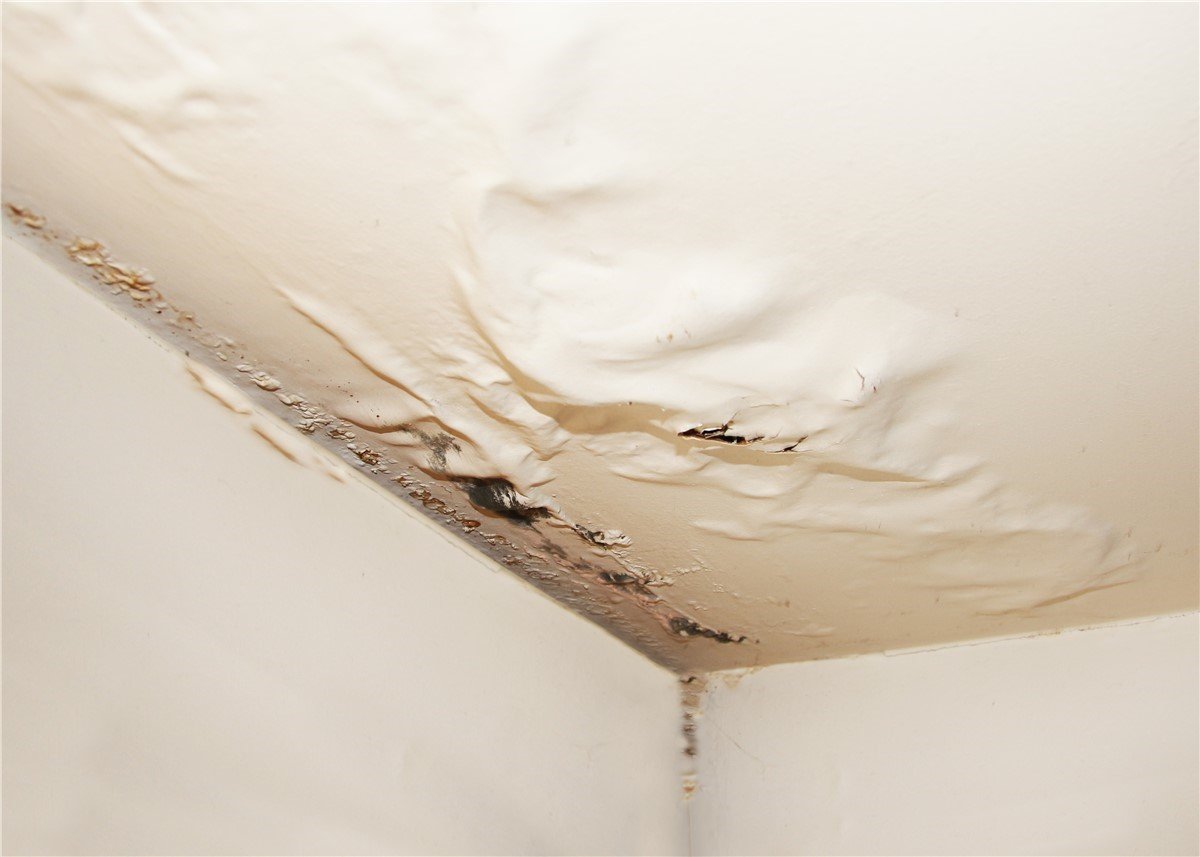
Hidden leaks rot decking and ruin drywall before you see a ceiling stain. We trace the true source — not just the visible drip point — and seal it permanently.
Wind Damage
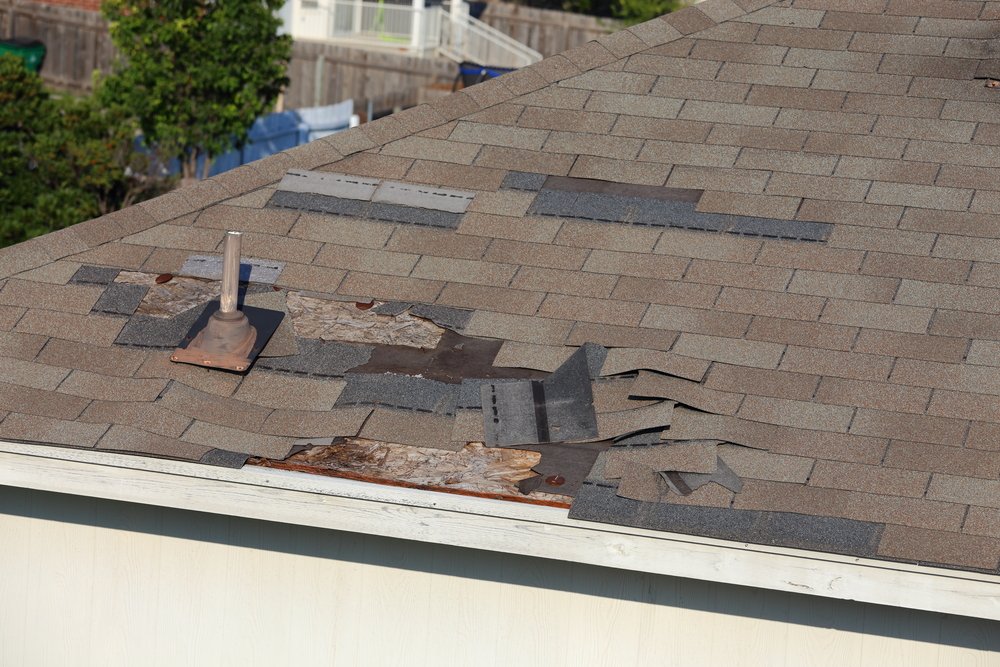
Lifted, torn, or missing shingles after high winds compromise the entire weather barrier. We repair with color-matched materials so the fix lasts and looks right.
Hail Damage
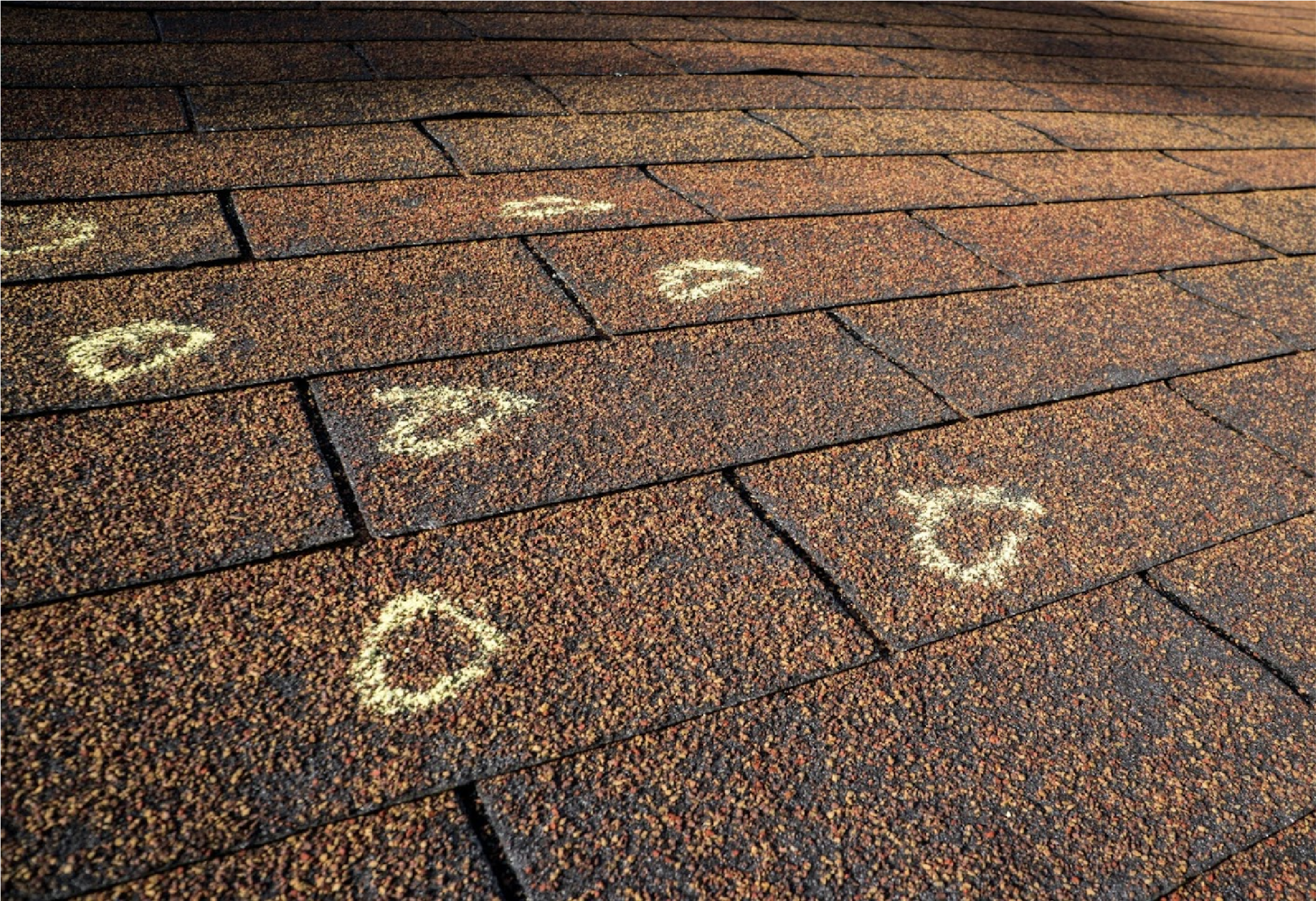
Bruised shingles and granule loss accelerate aging and void manufacturer warranties. We document every impact point and restore full protection — critical for insurance claims.
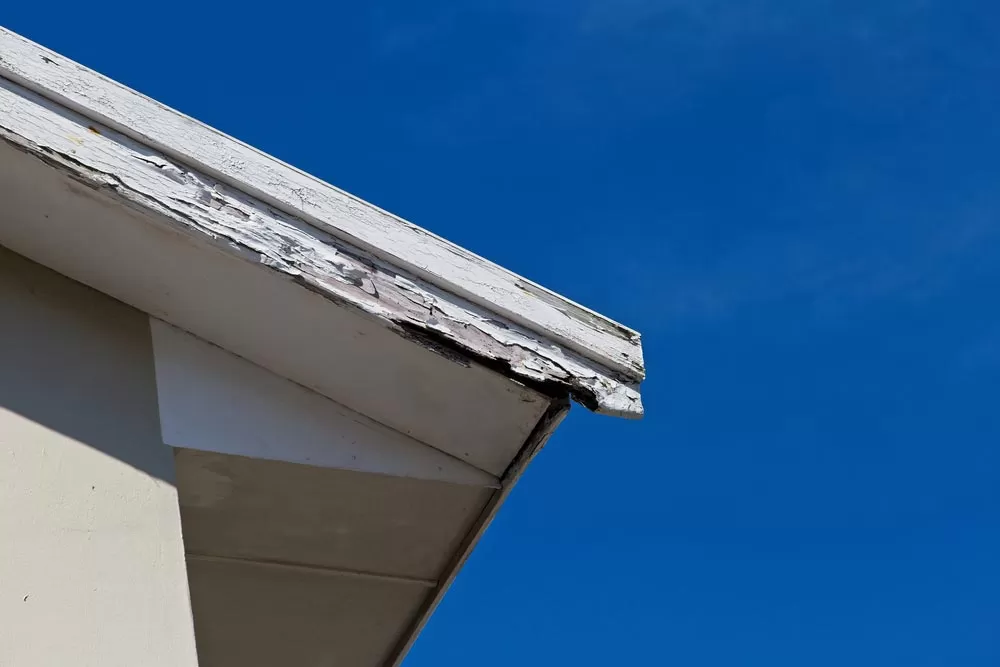
Fascia & Soffit Damage
Rotted fascia and soffits are an open invitation to moisture intrusion and pests. We replace deteriorated sections and repaint to match so the repair doesn't announce itself.
Our Roof Repair Process — First Call to Final Inspection
Every repair job follows the same disciplined sequence. You'll know what to expect at each stage, and nothing moves forward without your sign-off on the written estimate.
Initial Call & Scheduling
Call 762-477-3858 or submit online. For active leaks or storm damage, we prioritize same- or next-day scheduling to assess and stabilize before conditions worsen.
On-Site Inspection & Damage Assessment
A Davis Construction roofing specialist walks the full roof, checks the attic deck from below for moisture intrusion, and photographs every failure point — not just the obvious ones. Hidden deck rot and failed underlayment get flagged here, not after tear-off.
Written Estimate
You receive a clear, itemized written estimate before any work begins. Each line item explains what's being repaired, what material is being used, and why. No verbal-only quotes, no surprise add-ons at invoice.
Material Sourcing & Scheduling
We source materials matched to your existing roof — same shingle line, same profile, same granule color where available. Scheduling is confirmed once materials are in hand and weather is favorable for a quality installation.
Repair Execution
Our crew completes the repair to manufacturer spec and local building code. Flashing is re-bedded in roofing cement and mechanically fastened. Shingles are nailed at the correct exposure. Pipe boots and valley metal are sealed with compatible products — not improvised tape.
Quality Check & Final Walkthrough
After repairs are complete, the crew lead does a second roof walk to verify every penetration is sealed, every fastener is driven correctly, and no debris remains. We walk you through what was done and answer any questions before we leave.
Warranty Documentation
You receive written documentation of the workmanship warranty scope and the applicable manufacturer material warranty. Keep this with your homeowner's records — you'll need it if a related issue surfaces down the road.
Storm Damage? We Work Directly with Your Insurance Adjuster
When a storm damages your roof, the documentation you collect in the first 48 hours directly affects your claim outcome. Davis Construction photographs and logs every impact point, provides a written damage assessment formatted for adjuster review, and can be present during the adjuster's site visit to walk the damage together. We do not guarantee coverage — that depends on your carrier and the cause of loss — but we give adjusters exactly what they need to process a legitimate claim efficiently. For South Carolina properties in North Augusta, we're also familiar with the IBHS Fortified program and Class 4 impact-rated shingles, which some carriers recognize for premium discounts after a qualifying repair or replacement.
What Roof Repair Costs in Augusta — Breakdown by Repair Type
Price is the number one question homeowners in Augusta avoid asking a roofer directly because they expect a vague non-answer. Here is honest context on what moves repair costs up or down, organized by the most common repair types. For a fuller walkthrough, see what different roof repairs actually cost in Augusta broken down by damage type. Shingle replacement (isolated section): Cost is driven by the number of squares affected, the shingle product required to match, and whether the underlying decking shows rot that must be replaced before new shingles go down. A small blow-off repair covering two or three squares is a very different scope than a wind-stripped section spanning an entire slope. Deck rot discovered during tear-off adds both material and labor that cannot be priced until the old surface is removed. Flashing repair (chimney, skylight, wall): Flashing failures are the most under-diagnosed leak source in Georgia. Resealing a stepped flashing along a chimney or wall is a shorter job than a full reflash that requires removing and resetting courses of shingles. Counter flashing embedded in mortar joints on brick chimneys adds masonry work to the scope. The more embedded the flashing, the higher the labor component. Valley and pipe boot leaks: Open-valley metal replacement requires lifting adjacent shingles carefully to avoid cracking them — the difficulty goes up on older brittle shingles. Pipe boot replacements are typically straightforward unless the boot has been buried under multiple layers of repair sealant, which requires full removal and proper re-flashing. Soffit and fascia damage: Rotted fascia boards must be replaced before gutters can be re-hung properly. The scope expands when rot has traveled along the rafter tails behind the fascia. Vinyl soffit replacement panels are cost-effective; wood-matched custom profiles add material cost. Ridge cap loss: Missing ridge cap shingles are often the last thing a homeowner notices but among the first things wind pulls off. Replacement is relatively contained unless the ridge vent underneath has been compromised, which requires additional work to reseal the deck opening. The variables that push any repair toward the higher end: steep pitch (above 8/12 requires safety equipment and slower progress), multiple story height, limited attic access for interior inspection, material discontinuation requiring the closest available match, and repairs that must be staged around weather windows. When a repair grows into a larger scope than you budgeted for, spreading the cost of extensive roof work over monthly payments can keep the job moving instead of deferring it. Contact us at 762-477-3858 for a written estimate specific to your roof — a real number requires a real inspection.
The 7 Most Common Roof Repairs and What Causes Each One
Knowing what you're looking at helps you describe the problem accurately and sets realistic expectations for what repair involves. Here are the seven failures we see most frequently across Augusta and East Georgia properties. 1. Shingle blow-off. Wind gets under the exposed tab of a shingle that has lost adhesion — either because the factory seal strip never fully activated (common on shingles installed in cold weather) or because age and UV exposure have dried out the asphalt. Once one shingle lifts, the ones adjacent to it are exposed to peel. The fix is replacing the affected shingles and inspecting surrounding courses for early lifting before the next wind event. 2. Cracked or missing flashing. Flashing is the thin metal (usually aluminum or galvanized steel) installed at every roof penetration and transition. It expands and contracts with Georgia's wide temperature swings. Over time the sealant cracks and the metal can lift or corrode. Water follows the path behind failed flashing directly onto the decking. The true source of many 'ceiling leak' calls is a flashing failure 4–8 feet from where the drip appears inside. 3. Failed pipe boots. Every plumbing vent stack passes through the roof under a rubber or neoprene boot. UV exposure causes the rubber collar to crack and shrink, breaking the seal around the pipe. Augusta's heat accelerates this — neoprene boots on south-facing slopes can fail in as few as 8–10 years. Replacement with a quality EPDM or metal-collar boot solves it permanently. 4. Valley leak. Open-metal valleys concentrate roof runoff. If the valley metal has corroded, lifted at the seam, or was installed without adequate underlayment beneath it, water travels underneath and soaks the decking at the center of the roof. Valley leaks are tricky to trace because water travels several feet along the deck before dripping through — the wet spot in your attic may be nowhere near the actual entry point. 5. Soffit rot. Soffit panels trap moisture when ventilation is inadequate or when gutter overflow backs up against the fascia repeatedly. Rot spreads from the soffit into the fascia and then along the rafter tails. By the time soffit damage is visible from the ground, there is usually structural wood involved behind the panel. Rotted fascia must be fully replaced — it cannot be painted over and expected to hold gutter hardware. 6. Ridge cap deterioration. Ridge cap shingles are folded over the apex of the roof and take direct exposure to UV from two angles simultaneously. They age faster than field shingles. When ridge caps crack or go missing, the roof deck at the peak is exposed. Water infiltration at the ridge migrates down both slopes, making the source hard to identify without an attic inspection. 7. Storm puncture. Tree limbs, hail large enough to crack shingles (typically 1.5 inches or larger in diameter), and wind-driven debris can physically puncture the shingle layer and in severe cases the decking below. Punctures are usually obvious from the exterior, but the water damage path beneath the puncture is not — a 2-inch hole can saturate a 4×8 sheet of decking before the leak appears at the ceiling.
Repair or Replace? How to Know Which One You Actually Need
Every roofing contractor who recommends replacement over repair has a financial incentive to do so. We built Davis Construction on the opposite approach: we tell you what the roof actually needs, not what produces the largest invoice. Here is the honest framework we use. Age thresholds matter, but they're not absolute. A 15-year-old architectural shingle roof with isolated storm damage in one section is almost always a repair candidate — it has roughly 10–15 more years of service life if the rest of the field is intact. A 22-year-old 3-tab shingle roof with widespread granule loss across all slopes, widespread cracking, and two or more active leak points is approaching end of service life — repairing it extends the liability without meaningfully extending the value. The tipping point is typically when repair cost exceeds 30–40% of replacement cost, or when damage is distributed across more than 30% of the total roof area (a threshold also relevant to insurance claim evaluation — see the 25% rule FAQ below). Damage extent is the deciding variable. Localized damage — one slope, one section, one penetration — is almost always repair territory. Widespread granule loss, systemic shingle cracking, multiple active leak points across different areas of the roof, or deck damage discovered during inspection are signals that replacement provides better long-term value. Insurance coverage changes the calculus. When storm damage is the trigger, your carrier may cover replacement if damage meets their threshold — typically widespread impact across a large percentage of the roof area. A repair on an insurable storm event may cost you more out of pocket than a replacement that your carrier partially or fully funds. We document damage objectively and let you and your adjuster make that call with complete information. Cost-benefit in plain terms. If your roof has 10+ years of expected service life remaining and the damage is contained, repair is the right answer. If you're 2–3 years from replacement anyway, putting significant repair cost into the roof may not pencil out. We'll give you our honest assessment of where on that spectrum your roof sits — and we'll show you on the roof rather than just telling you.
Why a Licensed Roofer Outperforms a Handyman for Most Repairs
This question comes up regularly in Augusta — a Reddit thread about roof repairs in the area had multiple people asking whether a handyman would be cheaper and equally effective for minor repairs. It's a fair question, and it deserves a direct answer rather than contractor defensiveness. Permit requirements. In Georgia, roofing work above a certain scope requires a permit pulled by a licensed contractor. Work performed without required permits creates a title problem — unpermitted work must be disclosed in a home sale and can complicate or delay closing. A handyman cannot legally pull a roofing permit in Georgia. If the work was done without one, you own that liability. Liability exposure for the homeowner. A licensed roofing contractor carries general liability insurance and workers' compensation coverage. If a worker is injured on your property without workers' comp coverage, the homeowner's liability policy is the backstop — and your carrier may deny the claim if the worker was performing a trade service. With a licensed contractor, their coverage handles on-site injuries. With an unlicensed worker, that risk transfers to you. Homeowner's insurance implications. If you file a claim for a future leak and an adjuster's investigation reveals the prior repair was done by an unlicensed worker using non-standard methods, your carrier has grounds to reduce or deny the claim. The prior unpermitted repair becomes a pre-existing condition argument. Manufacturer warranty voidance. Shingle manufacturer warranties — which cover material defects for 25–30 years on architectural products — typically require installation and repair by a licensed roofing contractor using approved methods. Work done by an unlicensed handyman using incompatible products or improper fastening voids that coverage on affected sections. You lose the manufacturer protection on materials you already paid for. What recourse do you lose? A licensed Georgia roofing contractor is bonded and accountable to the state licensing board. If work fails, you have legal recourse: the bond, the license board, and civil action against a named business entity with documented insurance. With an unlicensed worker, your practical recourse is limited to small claims court against an individual — with no guarantee of recovery. For very minor cosmetic work — a single missing shingle on a low-slope section, for example — a qualified handyman may be adequate. For anything involving flashing, penetrations, valleys, or damage affecting more than a few shingles, the risk of an improper repair creating a larger problem downstream is real. The cost difference rarely compensates for the liability you absorb, which is exactly why it pays to hire the Augusta roofing contractor Richmond County homeowners trust even for work that looks minor.
What Our Roof Repair Warranty Actually Covers
Warranty language in roofing is frequently used as a sales tool without ever explaining what it means. Here is what Davis Construction's warranty actually covers, in plain terms. Workmanship warranty. Davis Construction provides a written workmanship warranty on completed repairs. This covers defects in installation — improper fastening, failed sealant application, incorrectly lapped flashing — that result in a leak attributable to our work. If a repair we completed leaks due to a workmanship issue within the warranty period, we return and correct it at no charge. The workmanship warranty does not cover damage caused by subsequent storms, owner-performed modifications to the roof, or failures in sections of the roof we did not touch. Manufacturer material warranty. The shingles, underlayment, and accessory products we install carry their own manufacturer warranties covering material defects. These are separate from our workmanship warranty and are transferable to subsequent owners in most cases, which adds value at resale. Manufacturer warranties require that installation was performed per their published specifications — which is another reason unlicensed or improper installation voids coverage. What voids coverage. Walking on the repaired area repeatedly without protection, applying third-party sealants over our work, allowing tree limbs to abrade the surface, or failing to address gutter overflow that backs water under the repaired edge are all actions that compromise the repair and void applicable warranty coverage on affected sections. How to file a warranty claim. Call 762-477-3858 and reference your repair date and the address. We pull the original inspection record and estimate, confirm the scope of our work, and schedule a return visit to assess whether the issue is a workmanship defect within warranty or a new failure unrelated to the prior repair. You get a written determination either way — not a phone runaround.
Storm and Hail Damage Repairs — What Augusta Homeowners Need to Know
Augusta sits in a region that sees strong convective thunderstorms from late spring through early fall, and the occasional winter ice event that stresses aging shingles. When a significant storm moves through, here is the sequence that protects your claim and your home. Document before you touch anything. After a storm, photograph your roof from the ground (use a zoom lens or phone camera) before anyone walks on it. Take interior photos of any ceiling stains or attic moisture — include a timestamp. Note the storm date and pull local weather service data confirming the event, hail size, and wind speeds. This documentation is what your insurance adjuster needs to connect the damage to a covered event. Call Davis Construction before calling your insurance company. We perform a written inspection, photograph every impact point, and prepare a damage report formatted for adjuster review. This gives you an independent, professional assessment before the adjuster visits — which prevents the situation where an adjuster's quick roof walk misses damage you later discover. Stabilization comes first for active damage. If the storm has left open penetrations or torn sections that are actively admitting water, we prioritize same- or next-day on-site assessment and stabilization — heavy-duty tarping and temporary weatherproofing where needed — before permanent repair is scheduled. We do not promise permanent repairs during an emergency visit on storm-damaged roofs; materials must be sourced and conditions must allow for a quality installation. Adjuster coordination. We can be present during the insurance adjuster's inspection to walk the damage together and ensure nothing is missed. We provide our written inspection report to both you and the adjuster. We do not guarantee claim approval — that is between you and your carrier — but we give adjusters the documentation they need to process a legitimate claim without unnecessary back-and-forth. Realistic timelines after a major storm. Following a regional storm event that affects many homes simultaneously, material lead times and contractor schedules extend. We are transparent about current capacity and will not oversell a timeline we cannot meet. Temporary stabilization protects your home while permanent repair is scheduled in the correct sequence. North Augusta, SC homeowners: If your property is in South Carolina, ask us about the IBHS Fortified program. Fortified-rated repairs and replacements using Class 4 impact-rated shingles are recognized by several SC carriers for premium discounts — a genuine long-term financial benefit beyond the repair itself.
Our Credentials and Licensing — Why They Protect You
Vague credential claims — 'licensed, insured, bonded' with nothing behind them — are standard filler on contractor websites. Here is what Davis Construction's licensing and insurance actually means for you as a homeowner. Georgia state licensing. Davis Construction & Roofing Co holds a valid Georgia contractor's license, which requires demonstrated knowledge of building codes, passage of a licensing examination, and ongoing renewal. This is not a business registration — it is a trade credential issued by the state. A licensed contractor can legally pull permits for roofing work in Georgia. An unlicensed worker cannot, which means any permitted work they perform is technically illegal and creates title and insurance exposure for the homeowner. General liability insurance. We carry general liability coverage that protects your property against damage caused by our work. If something goes wrong on-site — equipment damages your gutters, a dropped tool damages your vehicle — our liability policy responds. You can request a certificate of insurance confirming current coverage before we begin any work. If a contractor declines to provide a certificate, that is a significant red flag. Workers' compensation. Our crew members are covered under workers' compensation insurance. If a worker is injured on your property, their medical costs and lost wages are handled through our coverage — not through your homeowner's insurance policy. Hiring an unlicensed crew without workers' comp transfers that exposure directly to you. Named ownership. Davis Construction is family-owned and locally operated. You're not dealing with an anonymous franchise or a middleman — you're dealing with the person whose name and license are attached to every job. That accountability matters when something needs to be addressed after the crew leaves. To verify current licensing status, Georgia contractor license records are publicly searchable through the Georgia Secretary of State's website. We encourage you to verify — that is exactly what the public record system exists for.
Warning Signs Your Roof Needs Repair Right Now
Several of these are visible from the ground or from inside your attic without getting on the roof yourself. If you identify two or more from this list, call for an inspection before the next rain event. Interior water stains on ceilings or upper walls. A brown ring stain or soft drywall is evidence of active or recent moisture intrusion. The source is almost never directly above the stain — water travels along rafters and sheathing before dripping down. Missing or visibly lifted shingles. Visible gaps in the shingle field or shingles curled at the corners are an active weather vulnerability. Every exposed square inch of decking is a potential entry point. Granule accumulation in gutters. A small amount of granule shedding is normal. Heavy granule accumulation — especially concentrated along one slope — signals accelerated aging in that section. Granule loss exposes the asphalt mat to UV, which accelerates cracking. Visible daylight in the attic. Stand in your attic on a sunny day with the lights off. Any pinpoints of light coming through the roof deck indicate gaps, failed fasteners, or open penetrations. These are guaranteed leak points during a rain event. Sagging deck sections. Any soft spot, bounce, or visible deflection in the roof deck when walked indicates decking rot or structural damage below. This is a structural concern, not just a weather concern, and warrants immediate inspection. Moss or algae growth on shingles. Organic growth retains moisture against the shingle surface and accelerates granule loss and mat degradation. In Augusta's humid climate, untreated moss spreads quickly and shortens shingle service life. Flashing that is visibly lifted, corroded, or sealed with multiple layers of caulk. Successive caulk applications over original flashing are a sign that the underlying installation has been failing for years. Sealant-over-sealant is not a permanent repair — it is a deferred problem. If you're unsure what you're looking at, call 762-477-3858. We'll tell you honestly what we find and what, if anything, needs to happen next.
Frequently Asked Questions
How urgent is a leaky roof?
A leaky roof is urgent the moment you discover it — not because the ceiling will collapse tonight, but because hidden leaks rot decking and ruin drywall silently over days and weeks. Water that enters at a cracked pipe boot or failed flashing travels along rafters and sheathing, saturating insulation and wood well beyond the visible drip point. The longer it runs, the more decking replacement gets added to what started as a straightforward seal job. Call for an on-site assessment the same day you notice it.
Is a leaking roof an emergency?
Active water intrusion during or after a storm is an emergency situation — not in the sense of life safety, but in the sense that every hour of delay increases the scope of damage inside your home. If water is actively dripping into your living space, call Davis Construction at 762-477-3858 for same- or next-day on-site assessment and stabilization. Temporary weatherproofing (heavy-duty tarping) stops the damage from compounding while permanent repair is scheduled.
How to emergency roof repair?
In an emergency, the first priority is stopping additional water from entering — not attempting a permanent fix. From the interior, move belongings away from the drip area and use buckets to protect flooring. From the exterior, a heavy-duty polyethylene tarp secured over the damaged section with weighted boards (not nails — nails create additional penetrations) provides temporary protection. Do not attempt to walk on a wet roof. Call a licensed roofing contractor for professional tarping and a proper damage assessment before attempting any repairs.
How much does it cost to fix a leaking roof on average?
Roof repair cost depends on the type of failure, the materials needed to match your existing roof, and whether deck rot or structural damage is discovered once the damaged surface is removed. A single failed pipe boot is a much shorter job than reflashing an entire chimney or replacing a section of valley metal and the underlayment beneath it. There is no honest flat-rate answer that applies across repair types — a specific written estimate requires an on-site inspection. Call 762-477-3858 to schedule one.
What is the 25% rule in roofing?
The 25% rule (sometimes called the 25% repair rule) is an IBC-based code provision stating that if more than 25% of a roof area requires repair or replacement within any 12-month period, the entire roof must be brought up to current code — which in practice often means full replacement. Insurance carriers also use a version of this threshold: if storm damage affects more than 25–30% of the total roof area, many policies will cover full replacement rather than repair. This is why thorough damage documentation after a storm matters — an incomplete inspection that only counts obvious impact points may undercount the actual damaged percentage.
What is the 25% rule for roofing?
Same principle as above — the 25% rule refers to the threshold at which code and insurance policies shift from repair to replacement territory. When hail or wind damages a large percentage of the shingle field, your insurance adjuster will assess whether total affected area exceeds the carrier's threshold. Davis Construction's written inspection report documents every impact zone with photographs and measurements, giving the adjuster the complete picture needed to make that determination accurately.
Can you replace a roof in Georgia without a license?
No. Georgia law requires a valid state contractor's license to perform roofing work above certain dollar thresholds and scope levels. Roofing work performed by an unlicensed individual cannot legally receive a permit, which means it constitutes unpermitted work — a material defect that must be disclosed in a home sale and that can complicate insurance claims. Davis Construction holds a valid Georgia contractor's license. Verification is available through the Georgia Secretary of State's public license lookup.
How to know if a roofer is good?
Verify the license number through your state's public contractor database — Georgia records are searchable on the Secretary of State website. Request a certificate of insurance confirming general liability and workers' compensation coverage before work begins. Ask for a written, itemized estimate rather than a verbal quote. A credible roofer explains what they found during the inspection, shows you photographs, and is specific about what materials they're using and why. Vague answers to direct questions, pressure to sign the same day, and unwillingness to provide written documentation are red flags.
How to tell if a roofer is lying?
Specific warning signs: they refuse to provide a written estimate or license number, they identify damage you cannot see and cannot photograph for you, they claim your insurance will 'definitely cover' the full replacement before the adjuster has assessed anything, they ask you to sign the insurance proceeds over to them before work begins, or they offer to waive your deductible (which is insurance fraud in Georgia). A trustworthy contractor shows you the damage on the roof or in photographs, explains what caused it in plain language, and gives you a written estimate you can compare against other bids.
What is the average cost of a new roof in Georgia?
This varies significantly by home size, roof complexity, and material choice. Architectural shingles on a straightforward residential roof are the most common replacement scenario. Material costs, labor rates, and disposal fees all factor in, as does whether the deck requires replacement after tear-off. For an accurate number specific to your home's square footage, pitch, and current condition, a written estimate from a licensed Georgia roofing contractor is the only reliable answer. Davis Construction provides free written estimates — call 762-477-3858.
What is the average cost of a roof replacement in Georgia?
Replacement cost is driven by total roof area in squares (100 sq ft each), the pitch of the roof (steeper pitches require more safety equipment and slower labor), the number of penetrations (chimneys, skylights, vents — each requires flashing work), the material selected, and the condition of the decking revealed after tear-off. Decking replacement is priced per sheet and cannot be fully scoped until the old surface is removed. A written estimate after a physical inspection is the only honest answer — call us at 762-477-3858 to schedule one.
What is the most expensive part of replacing a roof?
Labor is typically the largest cost component in a roof replacement, followed by materials. Within the material cost, the shingles themselves are the primary expense — specialty products like impact-resistant Class 4 shingles, metal panels, or synthetic slate carry a significant premium over standard 3-tab or architectural shingles. Deck replacement is an unpredictable add-on cost that only becomes visible after tear-off — this is why Davis Construction performs a deck inspection between tear-off and installation, which is our primary anti-callback measure.
How much does it cost to reshingle a 2000 sq ft house?
A 2,000 sq ft house does not have a 2,000 sq ft roof — the actual roof area depends on pitch and overhang, and is commonly 20–40% larger than the floor plan footprint on a typical residential pitch. The roof area in squares (100 sq ft each), the shingle product selected, local labor rates, disposal fees, and the condition of the underlying decking all determine the final number. We provide written estimates after a free on-site inspection. Call 762-477-3858 to schedule.
What is the best time of year to replace shingles?
In Augusta, GA, the optimal installation window is March through May and September through November — temperatures are moderate, humidity is lower than peak summer, and severe weather frequency is reduced. Asphalt shingles require ambient temperatures above 40°F for the factory seal strips to activate properly, which is rarely a concern in the Augusta area. Summer installations are common and effective when scheduled around afternoon thunderstorm patterns. The practical answer: the best time is when your roof needs it — a deteriorating or actively leaking roof should not wait for an ideal weather window.
What is the cheapest time of year to get a new roof?
Late fall and winter (November through February) are traditionally slower periods for roofing contractors in Georgia, and some contractors offer better pricing to maintain crew continuity during slow months. However, price should not be the primary driver of timing — if your roof has active damage, delaying for a seasonal discount while it deteriorates costs more than the discount saves. The more reliable cost strategy is getting three written estimates from licensed contractors and comparing them on equal terms: same material, same scope, same warranty.