
Storm Damage Roof Repair in Augusta, GA
From hail bruising to wind tear-off and fallen-tree impacts — fully documented repairs that restore your roof and your insurance claim.
Severe Weather Damage? We Restore Roofs the Right Way.
A storm just tore through Richmond County and your roof took the hit. Storm damage roof repair in Augusta, GA restores your roof's structural integrity after hail, straight-line wind, tree impact, or severe weather rips through your home's first line of defense. Davis Construction & Roofing Co, led by owner Nichole Davis, works Augusta and the surrounding Richmond and Columbia County communities, from Summerville and Olde Town bungalows to the newer subdivisions off Walton Way Extension, and reaches out to Savannah's coastal exposure where tropical-remnant wind hits roofs hardest. We carry Georgia roofing credentials, document every damage point with photos, and work directly with your insurance adjuster, not just alongside them, so your claim reflects the actual scope of loss. If a storm just hit and water is getting in, call [762-477-3858](tel:+17624773858).
East Georgia storms move fast. A hail cell that clears in 20 minutes can leave behind granule loss, bruised shingles, cracked ridgecaps, and lifted flashing that won't show up as an interior leak for weeks. By then, your claim window may be narrowing and the damage has gotten worse. That's the real danger — not the storm itself, but the time that passes before a qualified roofer gets eyes on the damage.
This page walks you through exactly what storm damage looks like, how we repair it, how we handle your insurance claim from first inspection to final payout, what makes storm repairs fail long-term, and how to spot a storm-chasing contractor before you sign anything. If you already know you need an inspection, call 762-477-3858 and we'll get out to you.
Storm Damage We Specialize In
Our team is trained to identify and properly repair every type of storm-related roof damage, including:
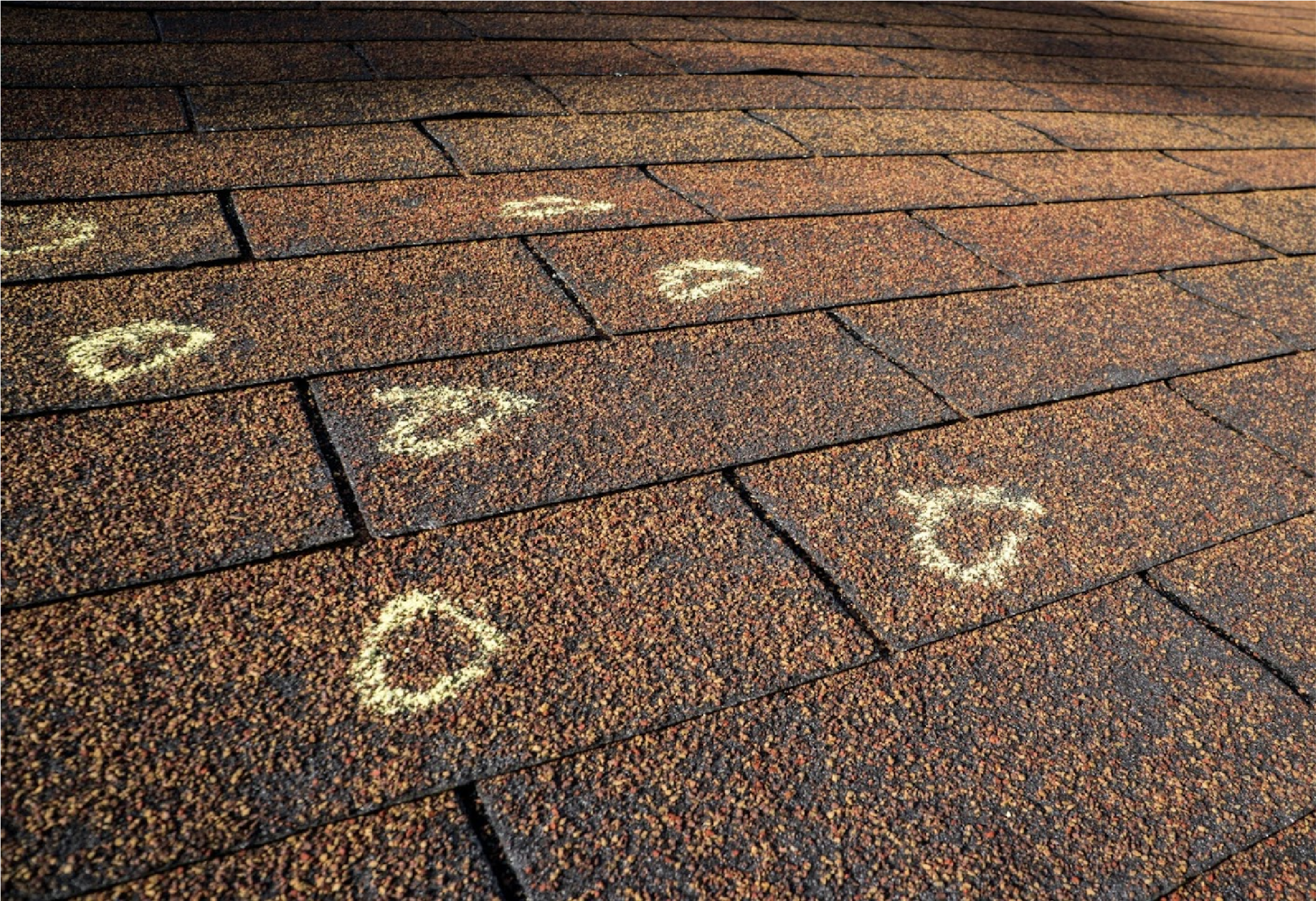
Hail Damage
Bruised shingles, granule loss, and impact fractures — fully documented and properly repaired.
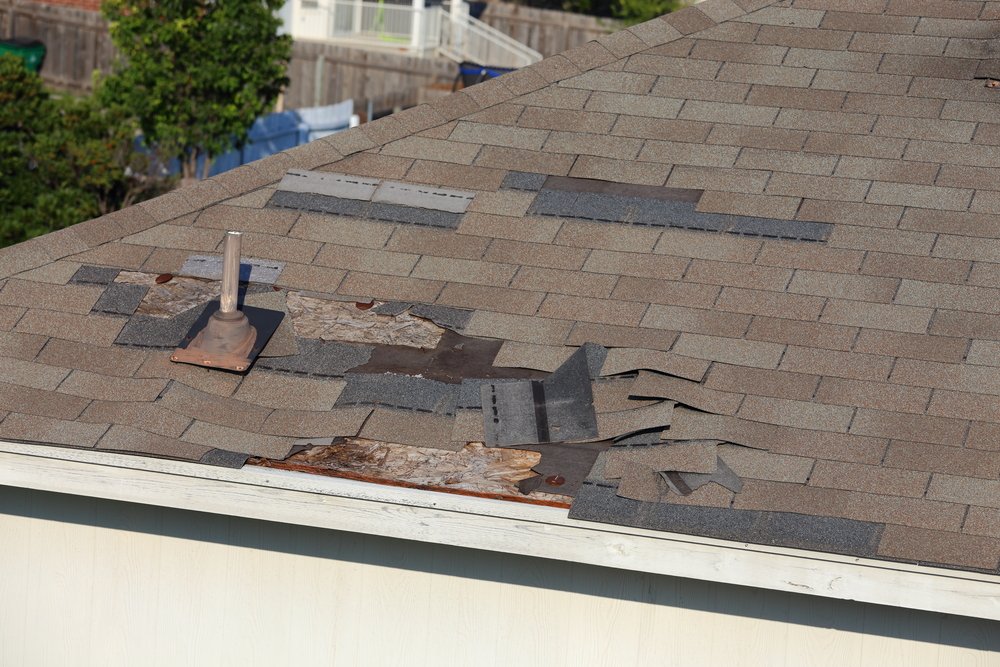
Wind Damage
Lifted, torn, or missing shingles after high winds — repaired with matched materials.
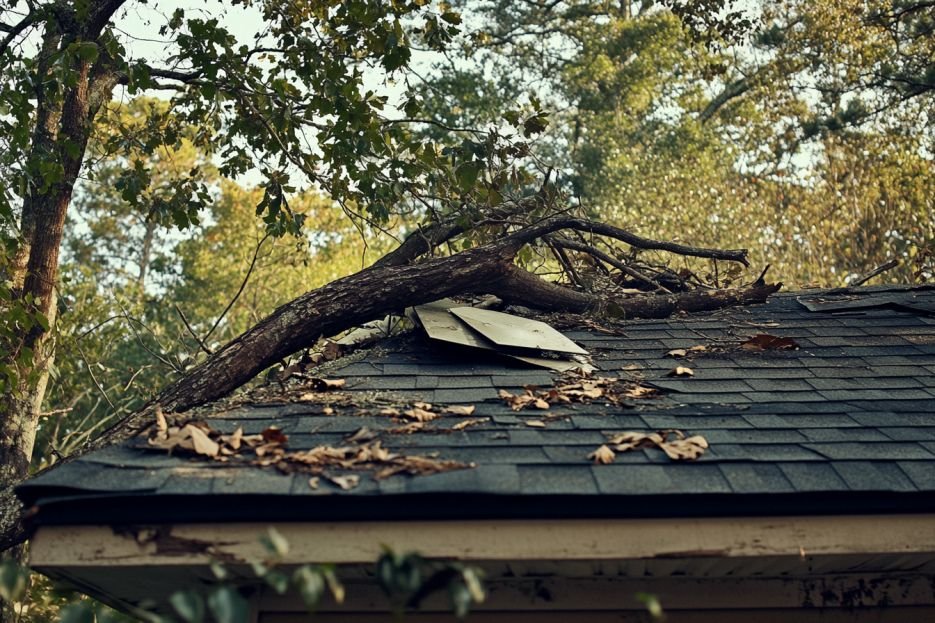
Fallen Tree Impact
Structural assessment and full restoration after impact damage from limbs or trees.
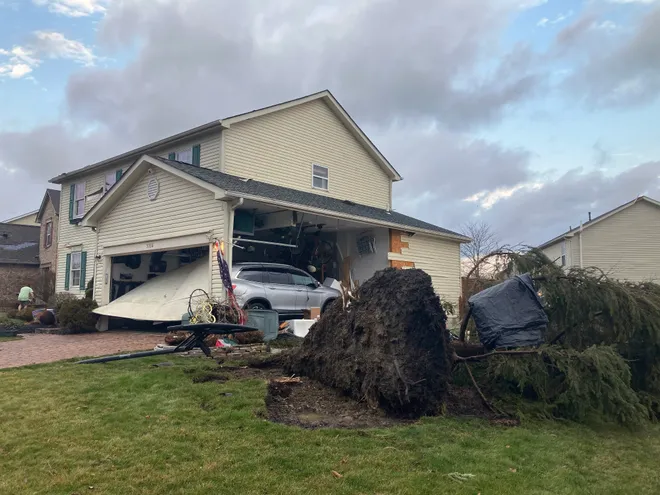
Severe Weather & Leaks
Fast assessment, weatherproofing, and permanent repair after thunderstorms and severe weather.
Our Storm Damage Repair Process, Step by Step
Most contractors say they follow a process. Here's what ours actually looks like — every step, in order, with nothing glossed over.
Free Damage Inspection
We perform a complete on-site assessment — including areas not visible from the ground — and photograph all damage for your records. This isn't a quick walk-around. We check flashing, ridgecap, fascia, soffit, valleys, and penetrations. Hail bruising on the field shingles and wind-lifted edges at the eaves don't always look connected, but they often tell the same storm story your adjuster needs to hear.
Damage Documentation Package
After the inspection we compile a full written scope with photos, measurements, and damage classification notes formatted for insurance submission. We don't hand you a verbal estimate and call it documentation. Your adjuster gets a professional report that matches what we found — so the claim reflects the actual loss, not a ballpark.
Adjuster Meeting On-Site
We schedule and attend the adjuster visit. That matters more than most homeowners realize. An adjuster working alone from the ground — or even on the roof without a contractor present — will miss items that add up to thousands of dollars in legitimate coverage. We walk the roof with them, reference the documentation package, and flag anything the initial review skips.
Emergency Stabilization If Needed
If there's active water infiltration or structural exposure, we install heavy-duty tarping and weatherproofing before permanent work begins. This step protects your home and keeps the claim valid — insurers can and do reduce payouts when secondary damage occurs after the event and before repair. Don't wait on this step.
Material Sourcing and Scheduling
Once your claim is approved we source manufacturer-matched materials. On partial replacements, matching matters for both appearance and warranty compliance. We don't substitute a close-enough shingle and call it done — if the original product line is discontinued we document the substitution and adjust the scope accordingly.
Permanent Restoration
Tear-off of damaged sections, underlayment inspection and replacement where needed, and installation using manufacturer-approved techniques. Flashing gets replaced — not re-sealed over existing failed metal. Ridgecap gets installed last, properly nailed, not stapled. We do a debris sweep and a final photo walkthrough before we leave.
Final Quality Check and Closeout
Before we close out the job, Nichole Davis or our lead crew supervisor walks the completed work against the original scope. You get final photos and a copy of all documentation. If your insurer requires a certificate of completion, we provide it. The job isn't done until the paperwork matches the roof.
How We Handle Your Insurance Claim From Inspection to Payout
Most roofing companies say they 'work with insurance.' That's not a process — it's a sentence. Here's what we actually do at each stage. Before you call your insurer: document the damage yourself with photos and video the same day if it's safe to do so. The timestamp on your documentation establishes the event date, which matters when your policy has a reporting window. Note the date and approximate time of the storm. If there's active water intrusion, place buckets and protect belongings, but don't start repairs yourself yet — unapproved repairs can complicate coverage. When you call your insurer: open the claim by phone or app. You'll get a claim number. Write it down. Do not accept or decline an adjuster estimate on the spot — you have the right to have a contractor present. Tell your insurer you're scheduling a contractor inspection before the adjuster visit. What we do before the adjuster arrives: we complete our independent inspection, build the documentation package, and coordinate with you on scheduling the adjuster visit so we can be there. We've handled hundreds of East Georgia insurance claims and we know what adjusters look for and what they miss. At the adjuster meeting we walk the roof together — our scope and their scope get compared in real time. If items are missing — underlayment, ice-and-water shield at penetrations, drip edge replacement — we flag them on the spot. Supplements filed after the fact are slower and harder to approve than items caught during the initial visit. After approval: you receive an Actual Cash Value check minus your deductible and work begins. Once work is complete, we provide documentation supporting the Replacement Cost Value release, which covers the depreciation holdback your insurer withheld. That second check is one many homeowners don't know to ask for — we make sure you get it. Your deductible is your only required out-of-pocket cost on a covered claim. Georgia law prohibits contractors from waiving deductibles — any contractor offering to 'cover your deductible' is asking you to participate in insurance fraud. We don't do that, and you shouldn't agree to it.
Augusta storm damage: what we see after Piedmont hail and straight-line wind
Across the Augusta metro, the two damage types that drive nearly every legitimate roof claim are spring and summer hail and the straight-line wind that comes with our Piedmont thunderstorms. Both are the primary insurance-claim driver in Richmond and Columbia County, and both leave damage that a ground-level glance almost always misses.
How hail and straight-line wind actually damage Augusta roofs
Hail here doesn't have to crack a shingle to matter. A fast-moving cell over Summerville or Walton Way Extension can bruise the mat, knock granules loose, and start a stress point that fails 12 to 18 months later, long after the storm date. Straight-line wind lifts shingle tabs and flashing at the eaves and penetrations, then re-seats them looking sealed while water drives underneath on the next heavy rain.
What we do not do is quote your deductible or promise your carrier will approve the claim, because coverage depends on your policy and the cause of loss. What we do is build a documented inspection report and walk the roof alongside your adjuster so the scope reflects what actually happened, not a drive-by estimate. If a storm just came through, our emergency roofing team can tarp and stabilize the same or next day, and you can read more about who we are on our Augusta roofing company page. To get an inspection on the calendar, call [762-477-3858](tel:+17624773858).
What Counts as Storm Damage — and What Gets Missed
Homeowners tend to notice the obvious stuff: a missing shingle, a dented gutter, a branch through the deck. What they don't notice — and what adjusters sometimes miss on a quick drive-by — is the damage that doesn't look like damage until water finds it.
Hail bruising: the most underestimated damage in the Southeast
Hail bruising is the most consistently underestimated damage type in the Southeast, and it's the reason we handle hail damage roof repair for Augusta homeowners as its own documented process. A hailstone doesn't have to crack a shingle to compromise it. The impact displaces granules, fractures the mat beneath the surface coating, and creates a stress point that fails under UV exposure over the next 12 to 18 months. By the time the ceiling stain appears, the bruising happened during a storm your insurer has already closed the claim window on. We look for circular granule displacement patterns, soft spots on the mat when pressed, and bare patches along ridges and valleys where granule loss accelerates.
Wind-lifted flashing: the invisible leak path
Wind-lifted flashing is almost never visible from the ground. The shingles may look fine, but at every penetration — chimney, pipe boot, dormer edge — flashing gets pulled up at corners during high-wind events and re-settles in a position that looks sealed but isn't. The first heavy rain after the storm drives water under that flashing and into the wall cavity. This is the category most responsible for 'my roof was fine after the storm and then it started leaking three weeks later.'
Granule loss: shortened roof life, even without a leak
Granule loss on field shingles matters beyond aesthetics. Granules reflect UV radiation and protect the asphalt layer from accelerated aging. A hail or wind event that strips granules from a significant portion of the field shingles shortens the remaining roof life materially — even if those shingles don't currently leak. Insurance adjusters are trained to assess granule loss, but the threshold for coverage varies by carrier and policy. We document the density and distribution of granule loss so the claim reflects the actual impact on remaining service life, not just visible holes.
Fascia and soffit damage: the items adjusters skip
Fascia and soffit damage often comes from falling debris and wind-driven rain, not direct hail impact. Rotted or cracked fascia compromises the gutter attachment and the roof edge seal. Damaged soffit panels allow water and pests into the eave cavity. These items belong in a storm damage claim but routinely get omitted when homeowners or adjusters focus only on the field shingles.
Hidden water infiltration: the most expensive miss
Hidden water infiltration is the most expensive miss. Roof decking that absorbs moisture after a storm event begins to soften within days. If that decking is under otherwise intact shingles — common after wind events that unseat but don't remove shingles — the deterioration is invisible from outside. We probe decking for soft spots during inspection, especially at valleys and around penetrations. Saturated decking discovered during tear-off on a partial replacement drives up job cost and repair timeline. Finding it during inspection means it's in the original claim scope — not a surprise change order after the job starts.
Why Storm Roof Repairs Fail — and How We Prevent It
Storm roof repairs fail in predictable ways. A homeowner gets a repair done after a storm, it holds through the summer, and then leaks again the following spring — or during the next storm. Now they're in a worse position than if they'd just done the damaged section properly the first time.
Skipped underlayment replacement
Skipped underlayment replacement is the first failure mode. Underlayment is the water-resistive layer between the shingles and the deck. In a partial repair, the temptation is to lay new shingles over existing underlayment because it saves time and materials. If that underlayment was compromised by the same storm that damaged the shingles — and it usually was — you've just put new shingles over a compromised barrier. The leak comes back. We replace underlayment in every repair section, period.
Mismatched material grades
Mismatched material grades create a weak point in the roof plane. A partial replacement using a lighter-weight or lower-impact shingle than the surrounding field repairs the damage but introduces a new failure mode. On insurance-covered repairs we source manufacturer-matched materials. Where the original product is discontinued, we document the substitution in the scope and use an equivalent or better product.
Improperly sealed or reused flashing
Improperly sealed or reused flashing around chimneys, pipes, dormers, and skylights is the number-one source of recurring leak complaints after a repair. Re-sealing old flashing with caulk is a temporary fix that lasts one to two seasons under Georgia's heat and UV exposure. Proper repair replaces the flashing, not just the sealant.
Incomplete debris removal
Incomplete debris removal before installation traps moisture. Granule buildup, broken shingle fragments, and organic debris in valleys and at penetrations create a reservoir that wicks water under new shingles. We clean the work surface before every installation.
Missing drip edge
Missing drip edge at eaves and rakes lets water wick back under the shingle edge. On partial repairs where drip edge wasn't pulled, water infiltration at the eave is common within two to three rain cycles. We check drip edge condition on every repair and include replacement in the scope when it's compromised. None of these are exotic problems — they're standard quality-control items that get skipped when a contractor is moving fast, working cheap, or both.
What Affects the Cost of Storm Damage Roof Repair
We won't quote a price on this page — storm damage scope varies too much for a number to mean anything without an inspection. But we will tell you what actually drives cost variation so you're not blindsided by an estimate.
Damage extent and location
Damage extent and location matter most. A two-square patch on a simple gable roof costs significantly less than a 10-square repair spanning a valley, a dormer, and a chimney penetration. Confined damage on accessible planes is the best-case scenario. Spread damage across complex geometry is the worst.
Roofing material type
Roofing material type changes the math. Standard architectural shingles are the most cost-efficient repair material. Metal panels, clay tile, slate, and low-slope membrane systems all carry higher material and labor costs. If your roof has a specialty material and a hail event hit it, the per-square repair cost will be higher than a comparable shingle repair.
Roof pitch and accessibility
Roof pitch and accessibility affect labor. A low-slope residential roof or a shallow 4:12 pitch is faster and safer to work on than a steep 9:12 or 12:12. Steep-pitch work requires additional safety equipment and slower production.
Deck condition discovered at tear-off
Deck condition discovered at tear-off is the one variable we can't fully predict before the repair starts — but we probe for soft spots during inspection and flag probable deck damage in the scope estimate so you're not surprised mid-job.
Code upgrade requirements
Code upgrade requirements vary by jurisdiction. Georgia building code updates over the last 15 years have changed minimum requirements for underlayment, ice-and-water shield at eaves, and drip edge installation. A repair on a roof permitted under older standards may require code-compliant upgrades in the repaired sections. We identify these requirements upfront — not as a change order after demolition.
Insurance deductibles and out-of-pocket cost
Insurance deductibles and out-of-pocket cost: your deductible is your baseline out-of-pocket cost on a covered claim. A typical homeowner's policy deductible in Georgia runs between $1,000 and $2,500, though wind and hail deductibles are sometimes written as a percentage of dwelling coverage rather than a flat amount. We don't cover deductibles — that's insurance fraud — but we do help you understand what your approval covers so there are no surprises at final billing.
Emergency versus scheduled timing
Emergency versus scheduled timing also affects cost. Active water intrusion that requires same-day stabilization adds cost for emergency tarping and mobilization. Repairs scheduled on normal lead time don't carry that surcharge.
How to Vet a Storm Damage Contractor Before You Sign
East Georgia gets hit by storms. After every major event, contractors from out of state show up within 48 hours canvassing neighborhoods. Some are legitimate. Most are storm chasers looking to collect deposits before the work is done and leave before the callbacks start. Here's how to tell the difference before you sign anything.
Verify their Georgia license
Verify their Georgia license. Georgia requires roofing contractors to hold a state license for residential work above a threshold cost. Ask for the license number and look it up at the Georgia Secretary of State's licensing portal. A legitimate contractor hands you that number without hesitation. One who deflects, changes the subject, or says 'we're licensed in our home state' is not licensed to work in Georgia.
Check their local business history
Check their local business history — how long have they operated in this market? A company that set up a Georgia LLC three weeks after a major storm event is a red flag. Davis Construction & Roofing Co is a Georgia-based business with an established local presence. We're here after the storm — and after the repair. When you have a warranty question or a callback issue two years from now, there's a local owner to call.
Never pay the full job cost upfront
Never pay the full job cost upfront. A deposit to secure materials is standard. Paying 50% or more before a single shingle is removed is not. If a contractor requires payment in full before starting, walk away — that's the single most consistent pattern in storm-chaser fraud.
Be skeptical of door-to-door solicitation
Be skeptical of door-to-door solicitation. Legitimate local contractors don't canvas neighborhoods the day after a storm — they're already booked with existing customers and referrals. The contractor at your door 36 hours after a major hail event came from somewhere else and is working volume.
Independently verify insurance coordination claims
Independently verify insurance coordination claims. Any contractor who says they'll 'handle everything with your insurance so you don't have to worry about it' should be asked exactly what that means: will they attend the adjuster meeting? Will you receive a copy of their inspection documentation? Will the scope they submit to your insurer be the same scope they bill you against? Get those answers in writing.
Ask about the workmanship warranty
Ask about the workmanship warranty. Material warranties come from the manufacturer. Workmanship warranties — covering installation errors — come from the contractor. Ask for the warranty terms in writing before signing anything. A contractor who won't commit to workmanship warranty terms in writing doesn't stand behind their work.
Red flag: waiving your deductible
Red flag: waiving your deductible. If a contractor offers to waive your deductible as a sales incentive, they're asking you to participate in insurance fraud. Georgia law is explicit on this. Decline immediately and report the offer to your insurer.
The First 48 Hours After Storm Damage — Your Action Plan
Before you hire anyone, before you call your insurer, this is what you should do in the first 48 hours after a storm damages your roof.
Stay off the roof
Stay off the roof. Wet shingles are slippery, weakened decking can give way without warning, and you don't have the fall-arrest equipment a trained roofer uses.
Document what you can see
Document what you can see from the ground and from upper-floor windows. Photograph everything you can safely access. Ground-level photos of visible damage, damaged gutters, dented AC units, dented window frames, and any debris on the ground all help establish the scope of the storm event. Timestamp those photos — they become part of your claim file.
Protect the interior
Protect the interior from active water intrusion. If water is getting in, move belongings, place buckets, and put down plastic sheeting to protect flooring. Don't make permanent repairs to the interior yet — insurers want to document interior damage, and covering it up prematurely complicates the claim. Document water staining on ceilings and walls with photos before you put anything over them.
Call your insurer and open a claim
Call your insurer and open a claim. You don't need a contractor's inspection to open a claim. Open it now to establish the date of loss. You can decline or adjust the initial assessment later. What you can't do is establish an earlier date of loss retroactively.
Don't authorize repairs from a door-to-door contractor
Do not authorize temporary or permanent repairs from a door-to-door contractor. Wait until you've had time to verify credentials, check references, and understand the claim process. Emergency tarping to stop active water intrusion is legitimate and often covered by your policy — but have it done by a contractor you've verified, not whoever knocked first.
Call Davis before the adjuster arrives
Call Davis Construction & Roofing Co at 762-477-3858. We'll schedule a free inspection, document the damage, and help you understand what's claimable before your adjuster shows up. Going into an adjuster meeting without a contractor-prepared inspection report is the most common and most expensive mistake homeowners make after a storm.
Frequently Asked Questions
How urgent is a leaky roof?
Very urgent. A roof leak actively damages more than shingles — water infiltrating the decking causes rot that spreads laterally, ruins insulation, and can reach wall cavities and ceiling drywall within days of a storm. The longer active water intrusion continues, the larger the repair scope and the higher the likelihood that secondary damage gets excluded from your insurance claim. If water is getting in, treat it as an emergency and call a roofer same day.
Is a leaking roof an emergency?
Yes, if water is actively entering the structure. A slow drip that started after the last storm may feel manageable, but it's doing hidden damage every hour it continues. Saturated insulation loses R-value. Wet decking begins to delaminate. Mold can establish in attic spaces within 24 to 48 hours of sustained moisture. Call Davis Construction Roofing at 762-477-3858 — we schedule free inspections and can install emergency tarping to stop the intrusion while we prepare the full repair scope.
How to emergency roof repair?
The safest emergency repair a homeowner can do is interior protection — move belongings, place buckets, and put plastic sheeting on floors and walls to limit secondary damage. Don't attempt to patch or tarp the exterior yourself — wet roofs are dangerous, and an improperly installed tarp can cause more water infiltration than it prevents. Call a licensed roofing contractor for emergency stabilization. We provide heavy-duty tarping and weatherproofing as a documented first step before permanent repair begins.
How soon should I report storm damage to my insurance?
The same day the damage occurs, or as soon as it's safe to do so. Most Georgia homeowner policies require 'prompt reporting' of claims without defining a specific window — but waiting weeks after a storm event gives adjusters grounds to question whether the damage occurred during the claimed event. Opening a claim establishes your date of loss. You can provide the full documentation package after your contractor inspection.
What is the 25% rule in roofing?
The 25% rule is a building code provision — adopted in varying forms across Georgia jurisdictions — that requires a full tear-off and replacement rather than a repair overlay when more than 25% of a roof's total area is damaged or replaced within a 12-month period. If your storm damage affects more than a quarter of the roof surface, a full replacement may be required by code rather than a repair, and your insurance claim scope should reflect that requirement. We identify applicable code rules during inspection.
What is the 25% rule for roofing?
Same rule, different phrasing — it's the code threshold that triggers full replacement requirements when repairs exceed 25% of the total roof area. This matters in insurance claims because it affects whether the approved scope is a partial repair or a full replacement. In Georgia, this rule is applied locally by county and municipal building departments, so the specific threshold and how it's enforced can vary between Augusta, Evans, Martinez, and surrounding communities.
Will I have to pay anything out of pocket for a covered storm claim?
In most covered storm damage claims, your only required out-of-pocket cost is your deductible. Some policies write hail and wind deductibles as a percentage of dwelling coverage rather than a flat dollar amount — so a 2% wind/hail deductible on a $300,000 dwelling coverage policy means a $6,000 out-of-pocket threshold before coverage applies. We review your claim approval with you before final billing so there are no surprises.
Do you provide emergency tarping while I wait?
Yes. Heavy-duty emergency tarping and weatherproofing is a documented, billable step in the storm damage repair process — and in many cases it's covered by your insurance claim as a reasonable mitigation measure. We install tarps designed for multi-week weatherproofing, not the lightweight poly you'd buy at a hardware store. Your home stays protected until materials are sourced, weather allows, and the permanent repair is ready to begin.
How much on average does it cost to fix a leaking roof?
Repair cost depends on the source of the leak, the material type, roof complexity, and whether the deck is compromised. A single failed pipe boot or a small flashing repair is a very different scope than a 10-square hail-damaged section with soft decking underneath. We don't quote numbers without an inspection because a made-up range doesn't help you budget — it just creates false expectations. Call 762-477-3858 for a free inspection and an honest scope-based estimate.
How to tell if a roofer is lying?
Three reliable indicators: First, they won't give you their Georgia license number on request — a legitimate contractor provides it without hesitation. Second, they offer to waive your deductible — that's insurance fraud and a criminal offer, not a discount. Third, they pressure you to sign before you've seen a written scope of work. A contractor who can't explain in writing exactly what they're doing, what materials they're using, and what warranty covers the workmanship isn't someone you should pay.
How to know if a roofer is good?
Ask for the Georgia license number and verify it. Ask for references from jobs within the last 12 months in your county — not testimonials, but actual names you can call. Ask for the workmanship warranty terms in writing before signing. Ask whether they'll attend the insurance adjuster meeting or just hand you a report. A good roofer can answer every one of those questions specifically and immediately. One who hedges or deflects on any of them isn't good — or isn't local.
Can you replace a roof in Georgia without a license?
No. Georgia law requires roofing contractors to hold a state license for residential work above a specified dollar threshold. Working without a license is a violation of state law, and homeowners who hire unlicensed contractors risk voiding their manufacturer material warranties, having insurance claims denied on installation-related grounds, and having no legal recourse when workmanship fails. Always verify a contractor's Georgia license before signing anything.