How to Tell if a Roofer Is Honest (and the Questions to Ask Before You Sign)
Storm-chasers and phantom damage are real. Here's how to spot an honest roofer in the Augusta area, the questions to ask before you sign, and what the 25% rule means.
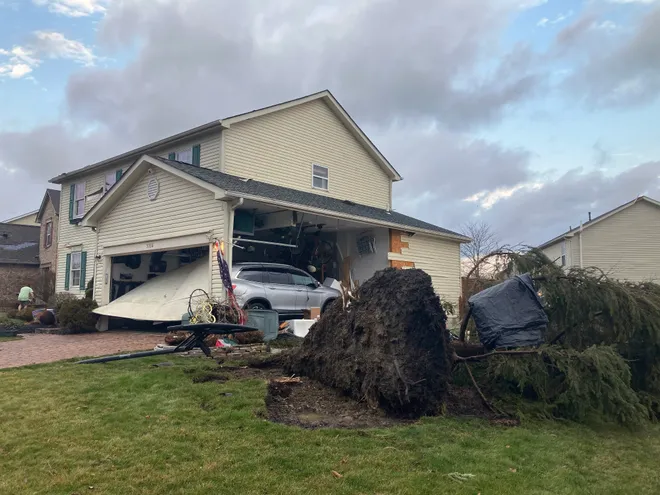
After a spring hail line rolls through Richmond and Columbia County, the door-knockers show up within days. Some are honest. A lot aren't. And the hard part for a homeowner is that a roof is one of the few purchases where you can't easily check the work yourself, because it's fifteen feet up and covered in shingles by the time anyone would notice a shortcut. So the real question isn't "who has the nicest truck wrap." It's "who's telling me the truth about my roof." We're a family-run shop that built its reputation on honest pricing and zero surprises, so this is the guide we'd give our own neighbors. Here's how to read a roofer before you ever sign a thing.
How to Know if a Roofer Is Good
A good roofer shows you the problem before they sell you the fix. That means photos of your actual roof, from your actual roof, not a stock shingle picture or a "trust me, it's bad up there." A good contractor in Georgia and South Carolina is licensed in the state the work is happening in, carries General Liability and Workers' Compensation insurance, and hands you a written scope that spells out exactly what you're paying for.
Watch How They Inspect
Beyond the paperwork, watch how they inspect. An honest inspection isn't a two-minute glance from the driveway. Our crew climbs the deck, photographs what we find, and walks the attic for ventilation and decking notes, because the biggest lifespan factor on a roof is what's underneath, not the shingle color. If a roofer never mentions the attic, the decking, or ventilation, they're quoting a roof they haven't really looked at. Start with an honest, documented roof inspection with no pressure and no phantom damage. That is how every one of our jobs begins.
How to Tell if a Roofer Is Lying or Overcharging
The tells are consistent, and once you know them you'll spot them fast. Here are the ones we see most in this market:
- Pressure to sign today. "This price is only good if you commit right now" is a sales tactic, not a roofing practice. A real quote holds long enough for you to think.
- Phantom damage. If a roofer points at your roof and describes damage but can't show you a clear, close-up photo of it, be careful. We've re-inspected plenty of roofs that a door-knocker swore were totaled and found them sound.
- Cash up front for the whole job. A reasonable deposit is normal. Full payment before a single shingle is torn off is a red flag.
- No license, no insurance, no local address. If they can't produce a license for your state or proof of insurance, walk away. In Georgia and South Carolina those aren't optional.
- "We'll waive your deductible." This one sounds like a favor. It's usually insurance fraud, and it tells you exactly how they treat the truth.
- A price that's dramatically lower than everyone else. That gap gets made up somewhere, usually in skipped underlayment, a four-nail pattern instead of six, or decking that never got inspected.
The honest version of this work looks different. In our roof repair work we trace the true source of a leak instead of patching the symptom, because a patch over rotted decking just moves the problem.
What Is the 25% Rule for Roofing?
The 25% rule is an insurance and building-code concept, not a pricing gimmick, and dishonest roofers sometimes twist it. Here's what it actually means. Many jurisdictions follow a code rule that says if more than 25% of a roof section is damaged or needs repair within any 12-month period, you can't just patch it. The whole roof section has to be brought up to current code, which in practice usually means a full replacement of that section rather than a spot repair.
Why the Rule Exists and How It Gets Twisted
The rule exists to stop endless patch-on-patch roofs that never actually get sound. It also matters for insurance claims, because it can be the difference between a carrier approving a repair and approving a replacement. The honest use of the rule is to explain it plainly and let the code and the photos decide. The dishonest use is to invent enough "damage" to cross the 25% line so a repair becomes a much bigger job. That's exactly why documented, photographed inspections matter, and why we work directly with your adjuster and document every claim honestly. If you're dealing with storm damage and an insurance claim, that's exactly the work we do.
Questions to Ask a Roofer Before Signing
A short list of questions separates the honest contractors from the rest in about five minutes. Ask these before you sign anything:
- Are you licensed in my state, and can I see it? In this area that's Georgia, South Carolina, or both.
- Do you carry General Liability and Workers' Compensation insurance? Ask for proof, not a yes.
- Will you show me photos of the actual damage on my roof? A good roofer offers these before you ask.
- Do you inspect the decking and attic ventilation after tear-off, before new material goes on? This is the step most quotes skip and the biggest reason two roofs age a decade apart.
- Is the price in writing, itemized, and does it hold? What you're quoted should be what you pay.
- Who handles my insurance claim, and will you meet the adjuster on-site? Direct adjuster handling is where partial approvals turn into full ones.
- What's your workmanship warranty, and is it in writing? Manufacturer warranties only stay valid when the roof is installed to spec.
If a contractor gets cagey on any of these, that's your answer. An honest roofer wants you to ask.
Not Sure You Even Need a New Roof? Here's When to Slow Down
We'll say the thing most sales-driven roofers won't. Not every roof that gets knocked on needs to be replaced. If your roof is under about fifteen years old, has no interior leaks, no missing shingles after the last storm, and no granules piling up in the gutters, you may not need any work at all yet. A single lifted shingle or a small flashing gap is often a repair, not a replacement. Don't let a stranger at your door talk you into a full tear-off because a hail line passed through the county. Get an independent inspection, look at the photos yourself, and make the call with real information. If the honest answer is "you've got years left," that's the answer we'll give you.
The Bottom Line
An honest roofer is easy to spot once you know the pattern: they show you the problem before the price, they put everything in writing, they're licensed and insured in your state, and they'll tell you when you don't need the work. Davis Construction & Roofing Co is licensed in Georgia and South Carolina, family-owned, fully insured, and backed by 40+ years of roofing experience and 3,000+ roofs completed. Real humans answer the phone, no call centers and no script. Call us at 762-477-3858 for a free, no-pressure inspection and a straight answer about your roof. Honest pricing, zero surprises.
How This Applies to Your East Georgia Roof
Every Augusta-area roof we touch starts with a free on-site inspection. We climb the deck, photograph what we find, walk the attic for ventilation and decking notes, and send a written estimate within 48 hours of the visit. If the article above raised a question about your specific roof — age, pitch, decking, ventilation, or insurance status — the inspection is where we answer it with photos and measurements instead of guesses.
We work the full CSRA and East Georgia footprint: Augusta, Martinez, Evans, North Augusta, Grovetown, and Savannah. Crews are factory-trained on the systems we install, fully insured for workers' compensation and general liability, and licensed in both Georgia and South Carolina. Manufacturer warranties stay valid because we install to spec — and our written workmanship warranty stands behind the install for the life of your ownership.
If you are dealing with active storm damage, do not wait for the article to finish — call us. We answer 24/7 and can have heavy-duty 6-mil reinforced poly tarping installed within a few hours of the call so the next squall does not make the inside of your house worse.