Gable vs. Hip Roof: Which Is Better for Augusta-Area Homes?
Gable and hip roofs age differently under Augusta's wind, hail, and heavy tree cover. A clear comparison of shape, wind resistance, cost, and drainage for East Georgia.
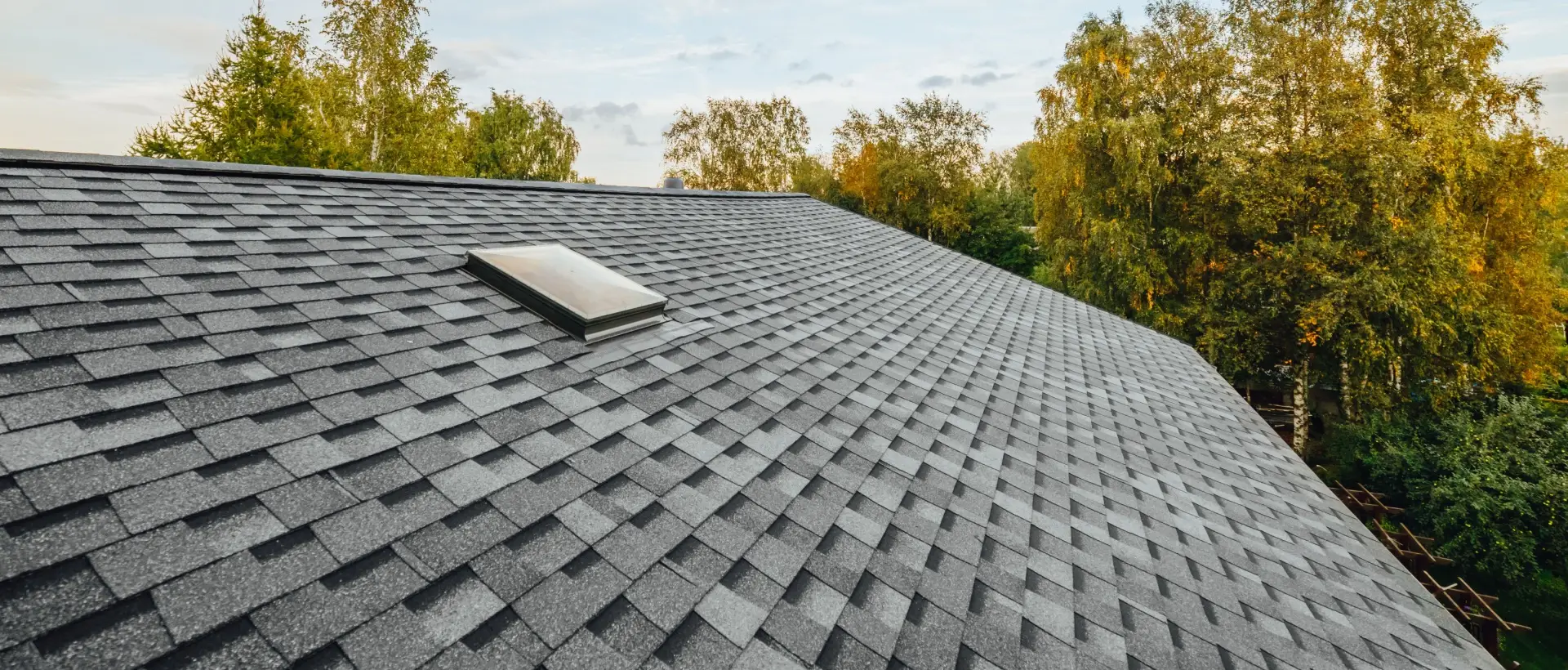
Drive through any neighborhood in the Augusta area and you're really looking at two roof shapes. The gable, with its classic triangle end and a clean peak. And the hip, which slopes down on all four sides to meet the walls. Both shed water, both take shingles or metal, and both are all over Richmond and Columbia County. But they don't handle a Piedmont thunderstorm the same way, and the difference shows up long before the shingle grade ever does. After 40+ years of roofing across this market and 3,000+ roofs completed, here's the honest breakdown of gable versus hip, framed against the wind, hail, and heavy tree cover our roofs actually have to survive.
Gable vs. Hip Roof: What's Actually Different
A gable roof has two sloping sides that meet at a ridge, leaving a flat triangular wall, the gable end, at each end of the house. A hip roof slopes on all four sides, so there's no flat vertical end wall at all. Every plane tilts down toward the eaves and meets at hips or a short ridge on top.
That single structural difference drives everything else. The gable end is a large, flat surface that catches wind like a sail. The hip roof has no such face, so wind flows over and around it from every direction instead of slamming into a wall. On the flip side, the gable's simple two-plane shape leaves more usable attic space and costs less to frame, while the hip's four-plane geometry is more complex and uses more material.
Which Roof Is Better in High Wind?
For straight-line wind, a hip roof is the stronger shape, and in the Augusta CSA that's not a small point. Spring and summer thunderstorms with straight-line wind and hail are the number one insurance-claim driver in this market, so wind performance is the part of this comparison that actually costs or saves you money.
Here's why the hip wins on wind:
- No flat gable end for wind to push against, so there's less uplift and less racking force on the whole structure.
- Four sloped planes brace each other, which makes the frame inherently more rigid in a gust.
- Wind spills over the hipped planes from any direction instead of building pressure against one wall.
A gable roof isn't automatically a problem, it's the most common roof in America for good reason, but the gable end and the ridge are where wind damage tends to start. In a strong Piedmont storm, an under-braced gable end can rack, and the first course of shingles along the rake edge is the most likely to lift. The fix isn't to avoid gables. It's to build and re-roof them right: proper gable-end bracing, a six-nail pattern instead of the bare-minimum four, and sealed rake and ridge details that hold under uplift. That nailing and edge detailing is exactly the part most quotes skip, and it's the difference between a gable that shrugs off a storm and one that starts shedding shingles.
For homeowners weighing a full re-roof, the shape you already have is usually the shape you keep, but the material and framing details are very much in play. Our roof replacement material and framing options page walks through the full ladder, from architectural to Class 4 impact-resistant, and how each grade changes both wind rating and cost on a gable or a hip.
Hail, Debris, and Heavy Tree Cover
Wind is only half the East Georgia story. The other half is what's falling out of the sky and off the trees.
Hail hits both roof shapes, but the geometry changes the odds a little. A hip roof spreads the same roof area across four shallower-reading planes, so no single slope takes the full brunt from one storm direction the way a large gable plane can. That doesn't make a hip hail-proof, hail bruises shingles and knocks granules loose on any roof, but it does mean the damage is often more evenly spread and less concentrated. On either shape, the thicker laminated body of an architectural shingle absorbs a hail strike far better than a thin 3-tab.
Then there's our heavy oak and pine cover, which is where the shapes matter in a way most guides never mention:
- Falling limbs are the obvious threat, and they'll damage a gable or a hip equally. Shape doesn't save you from a dropped branch.
- Limb scrub is the slow killer. Branches dragging across shingles in every storm grind off the granules that protect the asphalt. A steeper gable plane near a big oak can take more scrub on one face.
- Pollen and pine litter load the valleys and gutters. A hip roof has more hips and valleys where debris collects, so it needs its valleys and eaves kept clear, especially through our dense spring pollen.
When a limb or a hail line does open a roof up, the shape doesn't change the response, only the honest, documented one does. Our wind and storm damage repair work starts with a photographed inspection and, when a claim is involved, direct handling with your adjuster, so a gable end that racked or a hip valley that split gets documented properly the first time.
Gable and Hip Cost: What Moves the Number
On framing and materials alone, a gable roof costs less than a hip. The two-plane shape is simpler to frame, uses less lumber, and its wider-open attic is easier to work in. A hip roof's four planes, extra hips, and additional valleys mean more cuts, more framing, and more material for the same footprint, so it generally runs higher to build and to re-roof.
But upfront framing cost is rarely the whole picture in this climate. A few things push the number around:
- Complexity of the roof. More hips, valleys, dormers, and changes of plane mean more labor and more flashing, on either shape.
- Material grade. Moving from 3-tab to architectural to Class 4 impact-resistant changes the cost far more than gable-versus-hip does on most homes.
- Decking condition. On older Summerville bungalows and mid-century ranches, rotted OSB or plywood found after tear-off has to be replaced before new material goes down. We inspect the decking on every re-roof, and it's the line most quotes leave off.
We don't quote flat prices online, because pitch, square count, roof complexity, and decking condition all move the number, and a gable and a hip on two different houses are rarely comparable. What we will do is walk you through it line by line.
Not Sure Which Applies to You? Here's When Shape Doesn't Decide It
Let's be straight about something a lot of roof-shape articles won't say. If you already own the house, you're almost never choosing between gable and hip. You're keeping the shape you have and deciding on material, ventilation, and how well the re-roof is detailed. Swapping a gable roof for a hip is a major structural rebuild, not a re-roof, and it almost never pays off just for wind resistance. So don't let anyone sell you a "hip conversion" off a storm scare. For an existing home, the wins are in the details: proper gable-end bracing, a six-nail pattern, sealed rake and ridge edges, algae-resistant architectural shingles, and real attic ventilation. Get those right on the roof you already have and you've captured most of the storm resistance either shape can offer.
The Bottom Line for East Georgia
If you're building new and wind is your top worry, a hip roof is the more storm-resistant shape for our straight-line-wind exposure, at a somewhat higher framing cost. If you value a lower build cost, more attic room, and simpler lines, a well-braced, well-nailed gable roof holds up fine here, the key word being well-built. For the far more common case, an existing home due for a re-roof, the shape is already decided, and the real levers are material grade, decking, ventilation, and edge detailing. That's where a roof either hits the top of its range or fails early.
"For an existing home due for a re-roof, the shape is already decided. The real levers are material grade, decking, ventilation, and edge detailing, and that's where a roof either hits the top of its range or fails early."
Whichever shape sits over your head, a lifted rake edge, a racked gable, or a split hip valley after a storm is a repair question, not a rebuild one. Our roof repair for wind-damaged gables work traces the true source instead of patching the symptom, so the fix actually holds.
Davis Construction & Roofing Co is licensed in Georgia and South Carolina, family-owned, and backed by 40+ years of roofing experience and 3,000+ roofs completed. Real humans answer the phone, no call centers and no script. Call us at 762-477-3858 for a free inspection and a straight answer on the best roof for your home. Honest pricing, zero surprises.
How This Applies to Your East Georgia Roof
Every Augusta-area roof we touch starts with a free on-site inspection. We climb the deck, photograph what we find, walk the attic for ventilation and decking notes, and send a written estimate within 48 hours of the visit. If the article above raised a question about your specific roof — age, pitch, decking, ventilation, or insurance status — the inspection is where we answer it with photos and measurements instead of guesses.
We work the full CSRA and East Georgia footprint: Augusta, Martinez, Evans, North Augusta, Grovetown, and Savannah. Crews are factory-trained on the systems we install, fully insured for workers' compensation and general liability, and licensed in both Georgia and South Carolina. Manufacturer warranties stay valid because we install to spec — and our written workmanship warranty stands behind the install for the life of your ownership.
If you are dealing with active storm damage, do not wait for the article to finish — call us. We answer 24/7 and can have heavy-duty 6-mil reinforced poly tarping installed within a few hours of the call so the next squall does not make the inside of your house worse.