Do You Need Snow Guards on a Metal Roof in the South? (The Honest Answer for North Augusta)
You almost never need snow guards on a metal roof around Augusta and Aiken County. Here is the one honest case where they earn their keep, and how they help.
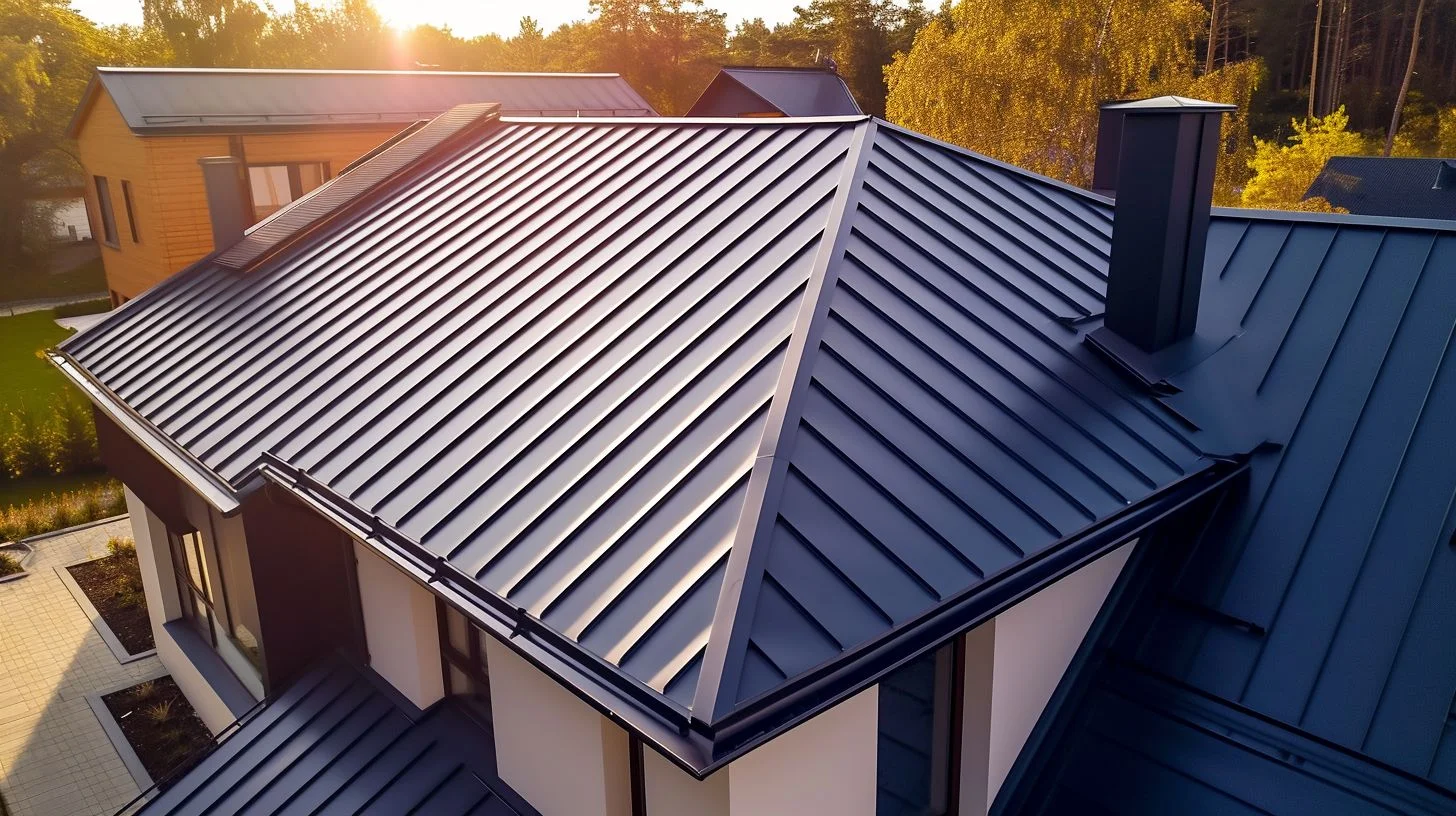
We get this question every time a new metal roof goes up on the South Carolina side of the river: "Do I need snow guards on it?" Here's the straight answer most contractors won't give you, because it doesn't sell an add-on: you almost certainly don't. This isn't the mountains and it isn't the Northeast. What we do get, once or twice most winters, is a hard morning freeze that leaves a thin sheet of ice on a slick metal panel, and when the sun hits it that sheet can let go all at once. If nothing is standing under it, that's a non-event. If your front door, a walkway, or a gas meter sits right below the eave, that's the one case where a small run of guards earns its keep. That's the whole honest story, and this post walks through it so you can decide with clear eyes.
Do You Need Snow Guards on a Metal Roof in Georgia and the Augusta Area?
For the vast majority of homes in Richmond County, Columbia County, and across the river in North Augusta and Aiken County, the answer is no. We don't get the sustained accumulation that piles up and slides in colder regions. What we get in the Augusta CSA is the occasional overnight freeze that glazes a smooth metal surface with ice, followed by a bright afternoon that warms the panel and releases it. On a standing-seam metal roof, which is engineered to shed water and ice fast, that release can come off in a single clean sheet. Guards exist to break that sheet into smaller, harmless pieces so it doesn't come down as one slab.
So the real question isn't "snow guards, yes or no." It's "is there anything directly below my eaves that a sliding sheet of ice could hit." That's a targeted question with a targeted answer, and it's why we won't quote a full-roof array of guards on a house that doesn't need one.
Snow Guards for Metal Roofs in North Augusta, SC: The One Case Where They Help
Here's the specific situation where we do recommend a short run of guards, and it comes up on maybe one metal roof in ten around here. Look at what sits under your eave line:
- A **front entry, porch, or walkway** where people stand or pass right below the roof edge
- A **gas meter, electrical service, or HVAC condenser** mounted against the wall under the eave
- A **lower roof section, deck, or skylight** that a sliding sheet would land on
- A **driveway spot** where you park directly against the house under a steep panel
If any of those are in the drop zone, a modest row of guards mounted along that section breaks the ice release into small pieces before it reaches whatever's below. Note the word "section." You don't guard the whole roof. You guard the run of eave that has something valuable or fragile under it, and you leave the rest of the roof to shed the way metal is designed to.
"We don't guard the whole roof. We guard the ten feet of eave with your front door under it, and we leave the rest to shed the way metal is built to."
The other half of the decision is the roof itself. A steep standing-seam panel over a busy entry is the textbook candidate. A low-slope metal section over an empty side yard almost never is. If you're planning a metal roof and you've got a covered entry or a meter bank under a steep eave, mention it to us on the standing-seam metal roofing walkthrough so we detail that one run right the first time, instead of retrofitting later.
What Snow Guards Actually Are (and How They Mount on Standing Seam)
Snow guards, sometimes called ice guards or snow stops, are small metal or polycarbonate devices that attach to the roof near the eave and act as a physical break. On a standing-seam roof they're the clean option, because they clamp onto the raised seam with a set screw. No holes, no penetrations through the panel, nothing to break the weather barrier or void the panel warranty. That matters. A guard that's screwed straight through a metal panel is a future leak, and it's exactly the kind of shortcut that voids a manufacturer warranty.
Mounting on an exposed-fastener metal roof
On an exposed-fastener metal roof the mounting is different and needs a sealed, gasketed fastener detailed correctly, which is one more reason we look at the specific roof before recommending anything. The install is straightforward when it's planned with the roof, and fussier as a retrofit, so the best time to decide is while the metal is going on.
How Snow Guards and Your Gutters Work Together
This is the part people miss. That same freeze-and-release cycle that drops ice off the eave also loads your gutters, and the two problems share a solution. When a sheet of ice lets go off an unguarded metal eave, it can tear at the gutter on the way down or dump a slug of melting ice and debris straight into it. A short run of guards over the entry doesn't just protect the door. It protects the seamless gutters and downspout run along that eave too.
For most homes here, the smarter winter investment isn't guards at all. It's making sure your seamless aluminum gutters are clear and pitched right so the freeze-thaw water actually drains, and that the fascia behind them is solid. Our spring pollen and heavy pine and oak litter clog gutters far more reliably than any ice event ever will, and a clogged gutter that freezes is a bigger problem than a bare metal eave. If your gutters are older or sagging, that's the first conversation, and our seamless gutter installation page covers gutter guards and downspout protection that pay off every month of the year, not once a winter.
When You Should Skip Snow Guards Entirely
We'll say the thing that costs us the add-on: most metal roofs in this market don't need snow guards, and putting a full array up is spending money on a problem you don't have.
- Skip them if nothing sits under your eaves but grass and mulch.
- Skip them if your metal panels drain over open yard.
- Skip them if a contractor is quoting a guard for every linear foot of a roof that shelters nothing but empty ground. That's not protection, that's padding a proposal.
The honest recommendation is simple. Walk your eave line and look for anything a sliding sheet of ice would hit. If you find a spot, guard that one run. If you don't, don't spend the money. If you're not sure, we'll tell you the truth when we're up there for your inspection, the same way we'd want someone to tell us.
The Bottom Line
Snow guards on a metal roof in the Augusta and Aiken County area are a targeted fix, not a default add-on. We don't have a snow-load problem here. We have the occasional winter ice-slide off a slick standing-seam panel, and that only matters when something valuable sits directly below the eave: a front door, a gas meter, a lower roof. In that one case, a short run of seam-clamped guards over that section is worth it, and it protects the gutter along that eave at the same time. Everywhere else, save your money and put it toward clear, well-pitched gutters and sound fascia, which do more for your roofline every season.
Davis Construction & Roofing Co is licensed in Georgia and South Carolina, family-owned, and backed by 40+ years of roofing experience and 3,000+ roofs completed. We install standing-seam metal roofing and seamless gutters across East Georgia and North Augusta, and we'll give you a straight answer on whether your roof needs guards at all. Real humans answer the phone, no call centers and no script. Call us at [762-477-3858](tel:+17624773858) for a free inspection, or tell us what's going on and we'll come take a look. Honest pricing, zero surprises.
How This Applies to Your East Georgia Roof
Every Augusta-area roof we touch starts with a free on-site inspection. We climb the deck, photograph what we find, walk the attic for ventilation and decking notes, and send a written estimate within 48 hours of the visit. If the article above raised a question about your specific roof — age, pitch, decking, ventilation, or insurance status — the inspection is where we answer it with photos and measurements instead of guesses.
We work the full CSRA and East Georgia footprint: Augusta, Martinez, Evans, North Augusta, Grovetown, and Savannah. Crews are factory-trained on the systems we install, fully insured for workers' compensation and general liability, and licensed in both Georgia and South Carolina. Manufacturer warranties stay valid because we install to spec — and our written workmanship warranty stands behind the install for the life of your ownership.
If you are dealing with active storm damage, do not wait for the article to finish — call us. We answer 24/7 and can have heavy-duty 6-mil reinforced poly tarping installed within a few hours of the call so the next squall does not make the inside of your house worse.