
Wind Damage vs. Hail Damage on an Augusta Roof: Which One Does Your Insurer Cover?
Straight-line wind and hail leave different marks and trigger different coverage. Here's how to tell them apart before you call the adjuster.
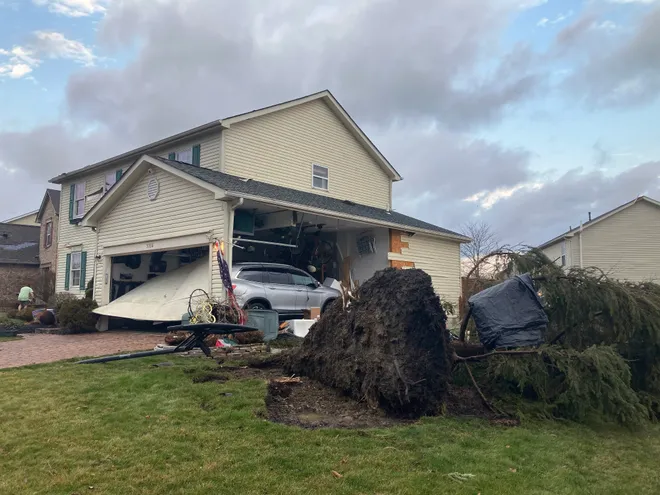
A single Piedmont thunderstorm can hit your roof two completely different ways in the same ten minutes. Straight-line wind peels and lifts shingles. Hail bruises and punches granules loose. Both are covered perils on most Georgia policies, so you'd think it wouldn't matter which one you file on. It matters more than almost anything else about the claim, because the cause of loss sets the scope, and wind and hail produce different scopes, different repair plans, and sometimes a very different answer from your carrier. After 40+ years of roofing across Richmond and Columbia County and 3,000+ roofs completed, here's the honest version: from your driveway the two can blur together, and getting the cause right before the adjuster shows up is the difference between a clean approval and a fight. This is the pre-claim guide we'd hand a neighbor on Walton Way Extension.
This post is the wind-versus-hail companion to our guide on telling hail damage from ordinary shingle wear. That one sorts a hail strike from an old, tired roof. This one sorts the two storm perils from each other, because they don't leave the same marks and they don't get fixed the same way.
Wind Damage vs. Hail Damage on a Roof: The Core Difference
Hail hits straight down and bruises the surface. Wind comes in sideways and breaks the seal that holds each shingle down. That one distinction drives every other tell. Hail lands as scattered, circular soft spots where the granules are knocked off and the black asphalt shows through, with no line or pattern, spread across the slopes that faced the sky. Straight-line wind does the opposite: it works the high, exposed edges, lifting tabs, creasing shingles, and tearing them off along the ridge, the rake edges, and the eaves. When our crew is on a roof settling the question, that's the read. Random circular bruises scattered across the field point to hail. Lifted, creased, or missing shingles concentrated along the edges point to wind.
The two also fail on different clocks. A hail bruise fractures the mat the day it lands and quietly leaks a year or two later. Wind damage is often immediate: a tab lifts, the seal breaks, and the next heavy rain drives water straight under it. That's why a lifted shingle after a storm isn't a wait-and-see problem. The seal that bonded it to the course below is already broken, and a shingle that gets laid back down flat still lets water track underneath on the next downpour.
Wind Damage Roof Repair in Augusta, GA: What Straight-Line Wind Actually Does
Straight-line wind in an Augusta thunderstorm regularly gusts hard enough to break shingle seals and strip tabs, and the damage shows up first along the high edges. It attacks the roof by pressure, not impact. Wind gets under the first course at the eave, lifts the tab, and either creases it where it folds back or tears it off entirely. On the ridge, lifted and missing shingles are easiest to spot against the sky. The repair is usually a localized one: replace the lifted and torn shingles, reseal the field, and check the decking at any spot that was exposed to rain.
Here's what wind damage looks like once you know where to aim:
- **Lifted tabs along the eaves and rake edges**, where wind gets under the first course and breaks the adhesive seal
- **Creased shingles** that folded back in the gust and were laid down flat again, with a visible fold line across the tab
- **Missing shingles** that tore off completely, leaving the gray or black underlayment exposed
- **Wavy or interrupted shingle courses** where the pattern suddenly looks disturbed
- **Loose, bent, or pulled-away metal** at the ridge vent, drip edge, and flashing seams
"A lifted shingle that looks fine because the wind laid it back down is the one that fools people. The seal is already broken. The leak just hasn't had its rainstorm yet."
The decking is the part that turns a cheap wind repair into an expensive one. Once a shingle is gone or its seal is broken, water reaches the OSB or plywood deck underneath, and on the older housing stock across Richmond and Columbia County that deck rots quietly until a small wind event becomes a full section tear-out. That's why we inspect the deck itself, not just the surface, and it's the same reason we don't patch over a lifted area without checking what the water already reached. If a storm just lifted shingles on your roof, [call 762-477-3858](tel:+17624773858) and we'll get out same or next day to look before the next rain does.
How to Tell If Your Roof Has Wind or Hail Damage
You usually can't confirm either one from the ground, but you can read which way to lean before an inspection, and the fastest sort is where the damage sits. Edges and ridge, or open field? Lifted and torn, or bruised and circular? Here's the ground-level split we use.
- **It's probably wind if:** shingles are lifted, creased, or missing along the ridge, rake edges, and eaves, you find whole shingles or shingle pieces in the yard, and the metal at the ridge or drip edge is bent or pulled loose at the seams.
- **It's probably hail if:** the soft metals (aluminum gutters, downspouts, roof vents, AC condenser fins) are freshly dimpled, there's a heavy new layer of granules on the splash blocks, and the shingle bruising is scattered and circular across the open slopes rather than concentrated at the edges.
- **It's very likely both, get it inspected, if:** you see lifted edges and fresh soft-metal dents at the same time, which is the normal outcome of a hard Augusta thunderstorm and the scenario that needs each area documented on its own.
The soft-metals check still does the heavy lifting for sorting hail, because metal dents when a shingle only bruises. For wind, the tell is displacement: shingles or pieces in the yard, lifted tabs along the edges, and metal pulled loose at the seams. If you're seeing lifted shingles after a storm in Martinez or anywhere across the metro, treat the roof as damaged until a pro confirms otherwise, and don't climb up to check. Everything on this list reads safely from the ground.
Why the Difference Decides Your Insurance Claim
This isn't a technicality. Both wind and hail are named perils on most Georgia and South Carolina homeowners policies, so both can be covered, but your carrier approves on the confirmed cause of loss and writes the scope to match it. A wind claim is often a localized repair of lifted and torn shingles plus any decking the rain reached. A hail claim, when the bruising is spread across the slopes, can support a far larger scope. File it as the wrong peril, or lump both into a vague "storm damage" with no evidence, and the adjuster has every reason to write the smaller scope.
That's why an undocumented "the wind got it" from a driveway glance is worth almost nothing to a claim. An adjuster acts on evidence: photographed lifted and creased shingles for wind, chalked impact points counted per 10-by-10-foot test square for hail, the dented soft metals, and the storm date that ties it all together. When both perils hit the same roof, documenting each one separately is what lets the adjuster write the full scope instead of splitting the difference.
Does Insurance Cover Wind Damage to a Roof?
Generally yes. Straight-line wind is a named peril on most Georgia and South Carolina homeowners policies, the same as hail, so wind damage is typically covered when it's documented and tied to a specific storm. The caveat is the usual one: coverage always depends on your individual policy and the confirmed cause of loss, the carrier writes the scope to match what the evidence shows, and ordinary wear or a maintenance problem the wind merely exposed is a different story. The practical move is to document the wind damage, each lifted and torn shingle photographed, and tie it to the storm date so the cause is unambiguous.
Timing works the same way it does for hail. Fresh wind damage is easy to pin to a dated storm: the lifted tabs are clean, the torn shingles are still in the yard, and the bent metal lines up with a weather event the carrier can verify. Wait a year and a lifted shingle starts to look like a maintenance issue, the loose pieces are long gone, and the carrier has more room to push back. Most policies in Georgia and South Carolina give you a window to file, often one to two years from the date of loss, but the exact deadline is set by your specific policy, so check your declarations page. Sooner documents cleaner.
When It's Not a Claim (We'll Tell You)
We'll say the part a storm-season door-knocker won't. Not every lifted shingle is a wind claim worth filing. If one tab lifted on a roof that's already past 18 to 20 years, the adhesive was likely brittle from age before the wind ever touched it, and that's closer to a worn roof reaching the end of its range than a covered wind event. If your roof is under about ten years old, nothing is in the yard, and the only "damage" is a single corner you can reach from a ladder, you probably don't have a claim worth opening. A denied claim can count against you at renewal, and a "free roof" pitch usually isn't free. If the honest answer after we look is "no storm claim here," that's the answer you'll get.
The flip side is just as honest. Don't assume a roof that looks intact from the street came through clean. A broken seal doesn't show from the ground, and a shingle the wind lifted and dropped back flat reads as normal until the next hard rain finds the gap. When the ground-level signs are ambiguous, the only way to know is a close-up look. Talk to a licensed roofer, not a door-knocker: [762-477-3858](tel:+17624773858).
What to Do When Both Hit the Same Storm
Most hard Augusta thunderstorms don't pick one. They bring straight-line wind that lifts the edges and hail that bruises the field, and the roof ends up with two causes of loss at once. The right move is to document each separately and let the evidence carry both. We photograph the lifted and torn shingles for the wind portion, chalk and count the hail impacts in test squares for the hail portion, record the soft-metal dents, and tie all of it to the storm date so the adjuster sees two clearly documented perils instead of one vague claim.
"When wind and hail hit the same roof, the claim lives or dies on keeping them separate on paper. Documented as two distinct causes, the scope reflects what actually happened instead of a drive-by guess."
If the roof is actively leaking when we arrive, our 24/7 emergency tarping and stabilization can lock it down the same or next day before more water reaches the decking, and the permanent repair gets scheduled once materials and weather allow. Having your contractor on the roof when the adjuster walks it is frequently what settles the scope, because we can point to the lifted shingle and the bruise the quick pass missed and show the photos that prove both.
The Bottom Line
Hail is random, circular, and sits in the open field of the roof. Straight-line wind is lifted, creased, and torn along the ridge and edges. Both are usually covered perils, but your carrier approves on the confirmed cause of loss and writes the scope to match, so getting each one labeled right and documented, especially when both hit the same storm, is the whole game. Check your soft metals and your edges from the ground, note the storm date, and get a documented on-roof inspection while the lifted tabs are clean and the granules are still in the gutter. Davis Construction & Roofing Co is a licensed, insured, family-owned Georgia roofer backed by 40+ years of roofing experience and 3,000+ roofs completed, and we cover the South Carolina side in North Augusta and Aiken County across the Savannah River. We work directly with your adjuster and document every claim honestly. Real humans answer the phone, no call centers and no script. Call us at [762-477-3858](tel:+17624773858) for a free, documented inspection, or request an inspection online. Honest pricing, zero surprises. Done Right. Built to Last.
How This Applies to Your East Georgia Roof
Every Augusta-area roof we touch starts with a free on-site inspection. We climb the deck, photograph what we find, walk the attic for ventilation and decking notes, and send a written estimate within 48 hours of the visit. If the article above raised a question about your specific roof — age, pitch, decking, ventilation, or insurance status — the inspection is where we answer it with photos and measurements instead of guesses.
We work the full CSRA and East Georgia footprint: Augusta, Martinez, Evans, North Augusta, Grovetown, and Savannah. Crews are factory-trained on the systems we install, fully insured for workers' compensation and general liability, and licensed in both Georgia and South Carolina. Manufacturer warranties stay valid because we install to spec — and our written workmanship warranty stands behind the install for the life of your ownership.
If you are dealing with active storm damage, do not wait for the article to finish — call us. We answer 24/7 and can have heavy-duty 6-mil reinforced poly tarping installed within a few hours of the call so the next squall does not make the inside of your house worse.