
How to Spot Roof Storm Damage From the Ground After an Augusta Thunderstorm
A no-ladder, ground-level checklist for Augusta-area homeowners to spot hail and wind roof damage safely after a storm, plus when to stop and call a pro.
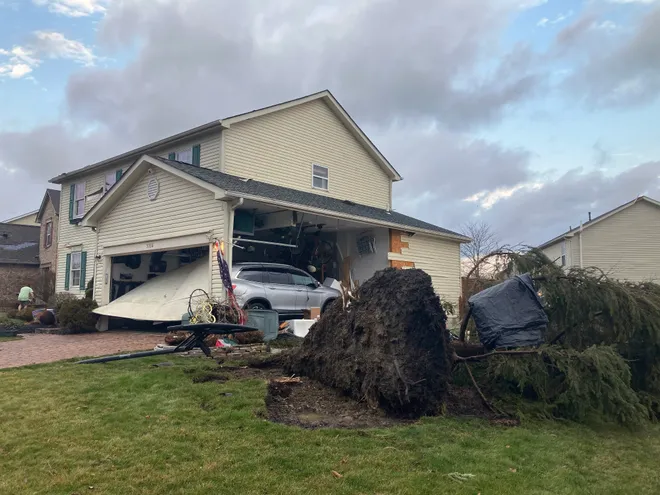
A Piedmont thunderstorm just rolled through, the wind laid the trees over, and now you're standing in the yard wondering if your roof took a hit. That's the right instinct and the right time to look. But here's the first thing we tell every Augusta homeowner who calls after a storm: do not climb up there to find out. Spring and summer thunderstorms with hail and straight-line wind are the number one insurance-claim driver across the Augusta CSA, and you can catch most of the warning signs from the ground with two feet planted on the grass. This is the checklist we'd run ourselves, in the order we'd run it, with a straight answer at the end about when to stop looking and let a pro get on the roof.
How to Tell If Your Roof Has Storm Damage
Start at the gutters and downspouts, because that's where the ground-level evidence collects first. Walk the full perimeter of the house and look for fresh dents in the aluminum gutters, downspouts, and any metal drip edge you can see. Hail leaves round dimples in soft metal, and straight-line wind bends and pulls sections loose at the seams. Then check the ground itself along the drip line and at the splash blocks under each downspout.
If you see any of these from the ground, treat the roof as damaged until a professional confirms otherwise:
- Fresh dents or dimples in gutters, downspouts, or metal drip edge
- Loose, sagging, or pulled-away gutter sections after high wind
- Shingles or shingle pieces in the yard, flower beds, or driveway
- A pile of grit at the bottom of a downspout or on a splash block
- A shingle line on the roof that suddenly looks patchy, lifted, or a different shade
- Bent or missing metal vent caps, ridge vents, or flashing
You don't need to identify every problem. You need to know whether the roof deserves a closer look. If two or three of these show up, it does.
Hail Damage Signs From the Ground
Hail is sneaky because it rarely punches a clean hole you can spot from the driveway. What it does instead is bruise the shingle mat and knock the protective granules loose, and the granules are your best ground-level clue. Those granules are the sandpaper-like coating on asphalt shingles that shields them from the sun. When hail hits, they wash straight into the gutter.
That's why **granules in the gutter after a storm** are one of the clearest signs worth acting on. Scoop a handful from the gutter or off a splash block. A little grit over years is normal aging. A fresh, heavy layer of coarse granules right after a hailstorm is not, and it means the shingle surface took a beating that day.
"Hail here doesn't have to crack a shingle to matter. It bruises the mat and starts a stress point that can fail a year later, long after the storm date. The granules in your gutter are the receipt."
From the ground, also scan any painted or metal surface hail would have struck at the same time: the AC condenser fins, the mailbox, a metal shed, gutter faces, and window screens. If those show fresh round dents, your roof caught the same stones. Hail damage on shingles themselves is hard to confirm from below because a bruise can look nearly normal until you're standing on it. That's the part that has to happen up close, and it's exactly why the checklist ends with a phone call and not a ladder.
Wind Damage to Roof Shingles
Straight-line wind is the other half of an Augusta thunderstorm, and it damages a roof differently than hail. Instead of bruising the surface, it breaks the seal that bonds each shingle to the one below and lifts the tabs. Sometimes it tears shingles off completely. Sometimes it lifts them, then lays them back down looking sealed while water drives underneath on the next heavy rain.
From the ground, wind damage shows up along the high, exposed edges of the roof. Focus your eyes here:
- The ridge line at the very top, where lifted or missing shingles are easiest to see against the sky
- The rake edges (the sloped sides) and eaves, where wind gets under the first course
- Any spot where the shingle pattern looks wavy, lifted at the corners, or interrupted
- Exposed underlayment (a black or gray layer) showing through where shingles used to be
A single missing shingle isn't cosmetic. It's an open door for water into the decking below, and once the OSB or plywood deck under the shingles starts to rot, a small wind event becomes an expensive repair. That hidden-decking problem is the one we see most on older homes across Richmond and Columbia County, and it's why we inspect the deck itself rather than just the surface.
Don't Forget the Fascia, Soffit, and Roofline
Look up under the eaves where the roof overhangs the walls. That horizontal board behind the gutters is the fascia, and the panel tucked underneath is the soffit. After a storm, water stains at the fascia and soffit line, peeling paint, or a soffit panel that's popped loose all point to water that got past the roof edge or a gutter that overflowed during the downpour. It's not just trim. Fascia and soffit tie the whole roofline together, support your gutters, and vent the attic, so damage there is a real signal, not a paint problem.
When to Stop Looking and Call
Here's the honest part. Everything above is what you can safely confirm from the ground. Everything past that point, whether a bruise is fresh hail or old wear, whether a lifted shingle broke its seal, whether the decking underneath is sound, has to be checked on the roof by someone trained and equipped to be up there. If you saw any of the signs on this checklist, stop. Don't climb, don't tarp it yourself, and don't wait for the next rain to tell you.
Call us and we'll get on the calendar for a documented on-site assessment. Our crew photographs the damage the way an adjuster needs to see it and builds an inspection report that ties what we find to the storm. If the roof is actively leaking, our 24/7 storm response and heavy-duty tarping can stabilize it the same or next day before more water gets in. And when it's time to sit down with your insurance company, we handle the documented storm-damage assessment with your adjuster so the scope reflects what actually happened, not a drive-by guess. To get an inspection scheduled, [call 762-477-3858](tel:+17624773858) or request an inspection online. Real humans answer the phone. No call centers, no script.
We'll say plainly what we won't do: we won't quote your deductible, and we won't promise your carrier will approve the claim, because coverage depends on your policy and the confirmed cause of loss. What we will do is document the damage accurately and give you a straight answer. That's how we've built a reputation across East Georgia over 40+ years and 3,000+ roofs. Done Right. Built to Last.
How This Applies to Your East Georgia Roof
Every Augusta-area roof we touch starts with a free on-site inspection. We climb the deck, photograph what we find, walk the attic for ventilation and decking notes, and send a written estimate within 48 hours of the visit. If the article above raised a question about your specific roof — age, pitch, decking, ventilation, or insurance status — the inspection is where we answer it with photos and measurements instead of guesses.
We work the full CSRA and East Georgia footprint: Augusta, Martinez, Evans, North Augusta, Grovetown, and Savannah. Crews are factory-trained on the systems we install, fully insured for workers' compensation and general liability, and licensed in both Georgia and South Carolina. Manufacturer warranties stay valid because we install to spec — and our written workmanship warranty stands behind the install for the life of your ownership.
If you are dealing with active storm damage, do not wait for the article to finish — call us. We answer 24/7 and can have heavy-duty 6-mil reinforced poly tarping installed within a few hours of the call so the next squall does not make the inside of your house worse.