
Roof Leaking? What to Do Right Now (and When It's a Same-Day Call)
A leak just showed up on your ceiling. Here's exactly what to do in the next hour, how to tell when it's a same-day emergency, and how to protect your home first.
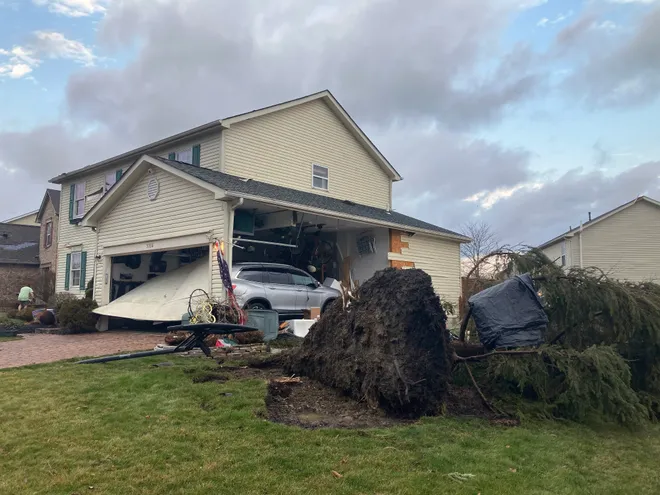
Your roof is leaking and you need it to stop. That's the whole reason you're reading this, so we'll skip the throat-clearing. In the next hour there are a handful of things you can do to protect your home, and a clear line between "call us right now" and "this can wait until morning." We run a 24/7 storm line for exactly this, so if water is actively coming in, call us at [762-477-3858](tel:+17624773858) before you read another word. If it's a slow stain and no active drip, finish this first, then call. We're a family-run Georgia and South Carolina roofer with 40+ years of experience and 3,000+ roofs completed, real humans answer the phone, and the honest triage below is the same one we'd give a neighbor.
Is a Leaking Roof an Emergency?
Sometimes yes, sometimes no, and the difference is whether water is actively entering the living space right now. An active drip during or right after a storm, water spreading across a ceiling, a sagging bulge holding water, or anything near a light fixture or electrical box is a same-day emergency. A faint old stain that isn't growing on a dry day usually isn't. Here's the line we draw, because knowing which side you're on tells you whether to call us tonight or in the morning.
The reason we split it this way comes from what actually causes the damage. Water sitting in decking, drywall, and insulation is what rots framing and grows mold, and in our humid-subtropical Piedmont climate that starts fast. The longer water sits, the bigger the repair, so an active leak is about stopping the clock, not just the drip. If you're on the emergency side of that line, our 24/7 storm response crew can tarp and stabilize same or next day, and the sooner we're there, the less of your home the water touches.
How Urgent Is a Leaky Roof?
Urgent enough that most active leaks shouldn't wait more than a day, but the exact clock depends on the volume and where it's landing. A steady drip into a bucket during a passing storm buys you a little time. A leak spreading across a ceiling, pooling above drywall, or running down a wall is racing to rot decking and short out wiring, and that's a call-now situation. After 40+ years of roofing across Richmond and Columbia County, the pattern we see is that homeowners who call the night of a storm pay for a repair, and the ones who wait a week pay for a repair plus drywall, insulation, and sometimes decking.
"We've never once shown up to an active leak and thought the homeowner called too soon. It's always the ones who waited that turned a shingle fix into a framing job."
There's a local wrinkle worth naming. Most of our leak calls cluster in the same window as our storm season, spring and summer thunderstorms with hail and straight-line wind that push through the Augusta CSA from March into August. Wind lifts or tears shingles and driving rain finds the opening, so a roof that was fine last week can leak in the next storm line. That storm timing is also why documentation matters, which we'll cover below.
What to Do When Your Roof Is Leaking: The First Hour
Move in this order. It protects your family first, then your home, then the evidence for a possible claim.
1. **Keep people away from active water and electricity.** If water is near a light fixture, ceiling fan, or outlet, don't touch the switch. Water and wiring together is the one part of this that's genuinely dangerous. If a ceiling is bulging and holding water, keep everyone out from under it. 2. **Contain the water inside.** Put a bucket or trash can under the drip and lay towels or a tarp to protect flooring and furniture. Move anything valuable out of the path. Empty the bucket before it overflows. 3. **Relieve a bulging ceiling, carefully.** A ceiling holding a pool of water will eventually give way and dump all of it at once. If you can do it safely from a stable ladder, poke a small hole at the low point of the bulge with a screwdriver and drain it into a bucket. A controlled trickle now beats a collapse later. 4. **Photograph everything before you clean up.** Interior stains, the dripping spot, the ceiling bulge, ruined belongings, and the storm date. This is your insurance evidence, and it disappears the moment you mop. 5. **Stay off the roof.** A wet roof is dangerous and walking a storm-hit roof causes more damage. Roof-side stabilization is our job, and we bring the gear to do it right. 6. **Call your roofer.** If it's active, that call is now. Tell us what you're seeing and we'll get out to tarp and stabilize.
Call [762-477-3858](tel:+17624773858) once your family is clear of the water. Real humans answer, no call center and no script, and we'll tell you straight whether it's a tonight problem or a tomorrow one.
How to Temporarily Stop a Roof Leak From Inside
Notice that nothing on that list has you climbing onto a wet roof to slap a tarp over the hole. That's on purpose. From inside, the safe move is containment and relieving pressure, not chasing the source, because a roof leak almost never enters where it drips. Water rides along the decking, a rafter, or a nail line and shows up several feet from the actual opening. Trying to seal it from the attic in the dark usually seals the wrong spot. The real fix is to trace the leak back to its true source and repair the underlying failure, and that's roof-side work we schedule once the weather clears. Your job tonight is to keep the water contained and off your wiring. Ours is to stop it at the source.
The Honest Part: When It's Not an Emergency (Don't Overpay)
We'll say the thing a lot of storm-chasers won't. Not every ceiling stain is a crisis, and you shouldn't pay emergency rates for one that isn't. If the stain is dry, old, and hasn't grown through the last few rains, you very likely don't need anyone out tonight. A single lifted shingle or a small flashing gap is often a scheduled repair, not a midnight tarp job. After a hail line rolls through the county, door-knockers show up within days insisting your roof is totaled. Get a documented inspection, look at the photos yourself, and if the honest answer is "this can wait for a normal appointment," that's the answer we'll give you. Emergency service exists for water actively getting into your home, not for a two-year-old water ring that finally caught your eye.
Emergency Roof Repair: What Actually Happens When We Show Up
An emergency roof repair is a two-step job, and it's important to know the first visit stabilizes the roof rather than permanently fixing it. When our crew arrives on a storm call, we locate the point of intrusion, install heavy-duty tarping and weatherproofing to stop the water, and fully photograph the damage for your insurance claim. That's the emergency step, and it's what stops the clock on interior damage the same day. The permanent repair, tracing the leak to its true source and rebuilding the failed area, is a separate scheduled step once materials and weather allow. On storm damage we work directly with your insurance adjuster and provide the documented inspection report, because coverage is decided on evidence and a photographed tarp job is a lot easier to approve than a cleaned-up ceiling.
If a storm just opened your roof, don't wait for it to dry out on its own. Call [762-477-3858](tel:+17624773858) and we'll get out same or next day to tarp, stabilize, and document. We cover Augusta, Martinez, Evans, Grovetown, and North Augusta on the South Carolina side.
The Bottom Line
A leaking roof is an emergency when water is actively getting into your home, near your wiring, or pooling in a ceiling. It can wait when it's a dry, old stain that isn't growing. Either way, contain the water inside, keep people clear of electricity, photograph everything, stay off the roof, and call. Davis Construction & Roofing Co is licensed in Georgia and South Carolina, family-owned, fully insured, and backed by 40+ years of roofing experience and 3,000+ roofs completed. We run a 24/7 storm line and work directly with your adjuster. Real humans answer the phone, no call centers and no script. Call us at [762-477-3858](tel:+17624773858) the moment water starts coming in. Honest pricing, zero surprises.
How This Applies to Your East Georgia Roof
Every Augusta-area roof we touch starts with a free on-site inspection. We climb the deck, photograph what we find, walk the attic for ventilation and decking notes, and send a written estimate within 48 hours of the visit. If the article above raised a question about your specific roof — age, pitch, decking, ventilation, or insurance status — the inspection is where we answer it with photos and measurements instead of guesses.
We work the full CSRA and East Georgia footprint: Augusta, Martinez, Evans, North Augusta, Grovetown, and Savannah. Crews are factory-trained on the systems we install, fully insured for workers' compensation and general liability, and licensed in both Georgia and South Carolina. Manufacturer warranties stay valid because we install to spec — and our written workmanship warranty stands behind the install for the life of your ownership.
If you are dealing with active storm damage, do not wait for the article to finish — call us. We answer 24/7 and can have heavy-duty 6-mil reinforced poly tarping installed within a few hours of the call so the next squall does not make the inside of your house worse.