
How to Spot Hail Damage on an East Georgia Roof (and What to Do Next)
Hail damage usually can't be seen from the street. Here's how to spot the real signs on an Augusta-area roof, and the inspection step that decides a claim.
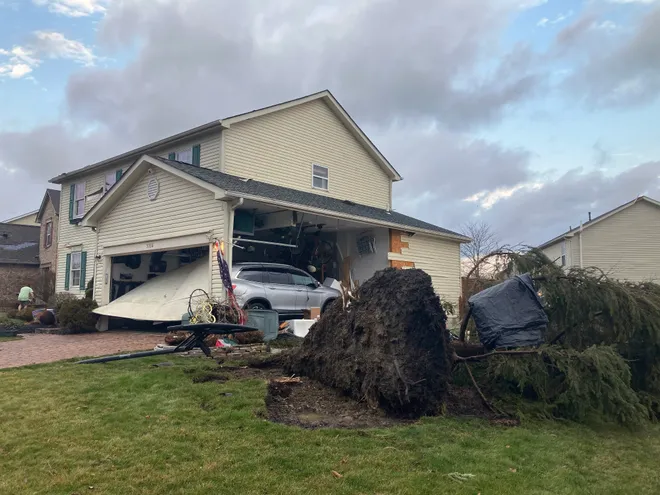
Here's the part most hail-damage guides get backwards: the worst hail damage is the damage you can't see from the driveway. After a spring line rolls through Richmond and Columbia County, homeowners walk out, look up, see a roof that looks fine, and assume they dodged it. Then two years later the shingles are shedding granules and the leak shows up over the kitchen. Hail rarely punches a hole. It bruises. And a bruised shingle looks normal from the ground while it quietly ages years faster than the rest of the roof. After 40+ years of roofing across the Augusta CSA and 3,000+ roofs completed, the pattern we see every storm season is the same: the damage that costs homeowners the most is the damage they never spotted, because they were looking for holes instead of bruises.
How to Tell if Your Roof Has Hail Damage
You usually can't confirm hail damage from the ground, but you can find the warning signs that tell you it's worth a closer look. The fastest tell is granules. Walk your gutters and downspout splash blocks the morning after a hailstorm and look for a pile of asphalt grit, like coarse black sand. That's the protective granule layer knocked loose by impact. The other ground-level signs are on your soft metals, because they dent before shingles show anything.
Hail Season in the Augusta CSA
Spring and summer thunderstorm hail is the number one insurance-claim driver in this market. Most of it falls between March and August, when Piedmont heat feeds afternoon storms that drop pea- to quarter-size stone.
Here are the visible signs, in the order they usually show up:
- Granules in the gutters, downspout elbows, and on splash blocks. A fresh pile after a storm is the clearest early signal.
- Dents in soft metals: aluminum gutters, downspouts, roof vents, valley metal, and flashing. Metal records a hit that a shingle hides.
- Dented or dinged AC condenser fins and mailbox. If the hail dented those, it hit your roof just as hard.
- Splatter marks, light rings or clean spots where hail knocked dirt and oxidation off a painted or weathered surface.
- Bruised or soft shingles: dark, sunken spots where the granules are gone and the mat gives slightly under a thumb. This is the real damage, and it's the hardest to see from the ground.
What Hail Damage Actually Looks Like Up Close
A hail bruise is a circular spot where the impact fractured the fiberglass mat and knocked the granules off, exposing the black asphalt underneath. Press it with your thumb and it feels soft, almost like a bruise on fruit, because the mat is cracked below the surface. That fracture is what matters. It lets UV and water reach the mat directly, so the shingle keeps failing long after the storm.
"Hail rarely fails a roof the day it hits. It plants the failure. The leak shows up a year or two later, which is exactly why the timely, documented inspection matters so much."
Why Hail Damage Is Deceptive Here
This is why hail damage is deceptive in our market specifically. A roof can pass the street test and still have dozens of bruises scattered across the sun-facing slopes. The damage is real, it's covered under most policies, and it's invisible to an untrained eye from the ground. That gap between what you can see and what's actually there is the whole reason a close-up, photographed inspection exists.
Hail Bruising vs. Limb Scrub: The Local Mix-Up
East Georgia has heavy oak and pine cover, and that creates a diagnosis problem unique to this area. Limbs dragging across shingles in the same storm scrub granules off in streaks and lines, following the branch. Hail knocks granules off in random, circular spots with no pattern. We see homeowners, and honestly some door-knockers, call limb scrub "hail" and call real hail "wear." That distinction isn't academic. An adjuster approves a claim based on cause of loss, and hail is a covered peril while general wear usually isn't. Getting the cause right, with photos, is often the difference between an approved claim and a denied one.
Hail Damage Roof Inspection: What a Real One Looks Like
A real hail inspection happens on the roof, not from the driveway, and it produces a documented report you can hand to your insurer. Our crew climbs the deck, chalks and photographs individual impact points, counts hits per test square (adjusters work in 10-by-10-foot squares), checks the soft metals and vents, and walks the attic for any decking or leak signs. Then we send a written, photographed report. That documentation is the point, because a claim is decided on evidence, and a bruise you can't photograph is a bruise the adjuster won't approve. Once the scope is set, our hail damage roof repair crew in Augusta handles the fix from matched materials to final closeout.
If you think a storm hit your roof, the right next move is a documented hail-damage inspection while the evidence is fresh. We also offer a straightforward free roof inspection if you just want to know where your roof stands. Call us at 762-477-3858 after a storm and we'll get out same or next day to assess and stabilize.
What to Do After a Hailstorm, Step by Step
Move in this order and you protect both your roof and your claim:
- Stay off the roof. Walking a hail-struck roof causes more damage and it's dangerous. Look from the ground and check the gutters and soft metals instead.
- Document from the ground. Photograph the dented gutters, the granule piles, the dinged AC fins, and note the storm date. Keep any local weather or hail-report records.
- Get a professional documented inspection. This is the step that decides everything. A photographed, on-roof report catches the bruising you can't see and gives your adjuster the evidence a claim runs on.
- File the claim, then have your contractor meet the adjuster on-site. We work directly with your insurance adjuster and provide the documented inspection report. Having the contractor present when the adjuster walks the roof is often what turns a partial approval into a full one. For the full filing walkthrough, see our guide on how to file a roof insurance claim in Georgia.
- Schedule the repair once the scope is set. Emergency tarping first if the roof is open, then permanent work after materials and weather allow.
One honest caveat we'll state plainly: we can't guarantee any specific claim gets covered, and we won't quote your deductible, because coverage depends on your carrier and the cause of loss. What we can do is document the damage accurately and stand behind the roof we install.
For North Augusta and the SC Side: The Class 4 Angle
If you're across the Savannah River in North Augusta, hail season is also a discount conversation. When it's time to replace a hail-damaged roof, stepping up to a Class 4 impact-rated shingle can qualify under programs like IBHS Fortified, which some South Carolina carriers tie to premium reductions. We install architectural shingles as the floor and walk you up to Class 4 when the storm exposure or the insurance math makes sense. It's the one upgrade that turns a hail replacement into lower future premiums instead of just a repair.
When It's Probably Not Hail (Don't Waste a Claim)
We'll tell you when to slow down, because a denied claim can count against you and a door-knocker's "free roof" pitch often isn't. If your roof is under about ten years old, you found no granule piles after the storm, your gutters and vents show no dents, and there are no soft spots on the shingles, you likely don't have a hail claim. Streaky granule loss that follows a tree limb is scrub, not hail. Scattered old bald spots with no fresh impacts are wear, not a storm event. Don't let a stranger at your door talk you into filing on damage that isn't there. Get an independent, documented inspection, look at the photos yourself, and if the honest answer is "no storm damage here," that's the answer we'll give you.
The Bottom Line
Hail damage on an East Georgia roof is usually invisible from the street, which is exactly why so much of it gets missed until it turns into a leak. Check your gutters and soft metals from the ground, get a documented on-roof inspection while the evidence is fresh, and let the photos and the adjuster decide the claim. Davis Construction & Roofing Co is a licensed, insured, family-owned Georgia roofer backed by 40+ years of roofing experience and 3,000+ roofs completed, and we cover the South Carolina side in North Augusta and Aiken County through licensed SC partner GCs. We work directly with your adjuster and document every claim honestly. Real humans answer the phone, no call centers and no script. Call us at 762-477-3858 for a free, documented inspection after the next storm. Honest pricing, zero surprises.
How This Applies to Your East Georgia Roof
Every Augusta-area roof we touch starts with a free on-site inspection. We climb the deck, photograph what we find, walk the attic for ventilation and decking notes, and send a written estimate within 48 hours of the visit. If the article above raised a question about your specific roof — age, pitch, decking, ventilation, or insurance status — the inspection is where we answer it with photos and measurements instead of guesses.
We work the full CSRA and East Georgia footprint: Augusta, Martinez, Evans, North Augusta, Grovetown, and Savannah. Crews are factory-trained on the systems we install, fully insured for workers' compensation and general liability, and licensed in both Georgia and South Carolina. Manufacturer warranties stay valid because we install to spec — and our written workmanship warranty stands behind the install for the life of your ownership.
If you are dealing with active storm damage, do not wait for the article to finish — call us. We answer 24/7 and can have heavy-duty 6-mil reinforced poly tarping installed within a few hours of the call so the next squall does not make the inside of your house worse.